
Sound Proof Insulation
Sound Proof Insulation: The Warmth of a Quiet Home
In New York, quiet is a luxury. One product rarely delivers it. Instead, you build an assembly. Our guide on sound proofing a room breaks down the system. First, seal air leaks. Next, add mass. Then, decouple surfaces to break vibration bridges. After that, apply damping to control resonance. Finally, install sound proof insulation to calm the cavity.
A wall cavity is not empty space. It can behave like a speaker cabinet. Sound enters, reflects, and pressurizes the void. That trapped air acts like a spring between two masses. When the spring hits its natural frequency, sound transfer jumps. Engineers call this mass air mass resonance. NIST research on wall and floor sound insulation shows how cavities shape real assembly performance.
Fibrous absorption adds friction losses inside the void. Therefore, the assembly stores less energy. As a result, voices and impact noise feel less sharp. This is why sound proof insulation is a performance layer, not a label claim.
Mineral Wool Insulation: The All Around Performer
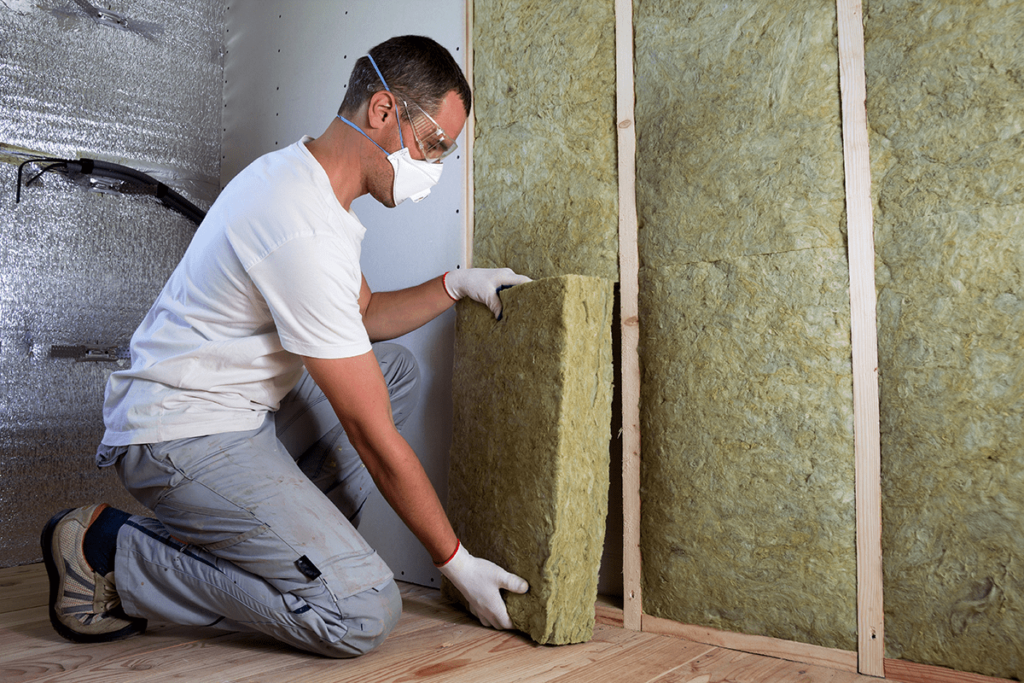
We often specify mineral wool for sound proof insulation in wall soundproofing. Mineral wool stays dense, so it holds position. It also offers high airflow resistivity, which improves absorption. That matters, because gaps become resonance chambers. Install it tight, with full contact. Do not compress it.
Mineral wool does not block sound by itself. Instead, it controls resonance, so mass and isolation can do their jobs. USG tested acoustical assemblies show mineral wool inside many high performing builds. The same logic applies in ceiling soundproofing, especially with impact noise.
Cellulose Dense Pack: High Risk Without Discipline
Dense pack cellulose can work, but density must stay consistent. Retrofits make that harder. Void pockets behave like mini cavities. So performance swings from bay to bay. Specify netting, measured fill, and field checks. Otherwise, results become unpredictable.
Open Cell Spray Foam: Absorptive, Not Isolating
Open cell foam can reduce air movement and tame some reflections. It helps most at mid and high frequencies. However, it is not a standalone sound proof insulation strategy. Use it as a support layer, not a finish line. Building America guidance on spray foam use in assemblies is a solid reference point.
Closed Cell Spray Foam: Sealing and Thermal Control
Closed cell foam excels at air sealing and high R value per inch. It cures rigid, so it absorbs less sound energy. Pair it with fibrous sound proof insulation when you need resonance control. Use it strategically at leakage points, not as the only cavity fill.
Beyond Conventional Materials
Natural fibers can perform well when you install them with full contact. Sheep’s wool, hemp, and denim can absorb sound and buffer moisture. Still, availability and code rules vary by building. The DOE insulation materials overview helps compare options by type and application.
Why Density Beats Fluff
Low density fiberglass batts rely on perfect installation. Real jobs rarely deliver perfect installation. Edges gap, batts slump, and sound slips through. Denser batts hold shape and resist airflow inside the bay. That improves acoustic absorption and thermal comfort.
Resonance Control Is the Difference
Sound couples through assemblies, not through a single layer. A floor above and a ceiling below form a mass air mass system. An empty cavity strengthens the resonance peak. Fill the cavity, and you damp that air spring. This is why sound proof insulation matters most in the frequency range you hate.
After you control transfer, manage reflections too. Acoustic panels reduce RT60 and improve speech clarity. That helps conference rooms, living rooms, and any space that feels loud inside.
A Practical Finish Line
Start with a site review before you buy materials. An acoustical consultant can map flanking paths and specify the right assembly. Then, install sound proof insulation with zero voids. That detail separates quiet from disappointment.