
Acoustic Panels NYC: Design, Supply and Installation
Design, supply and installation of acoustic panels for NYC offices and studios
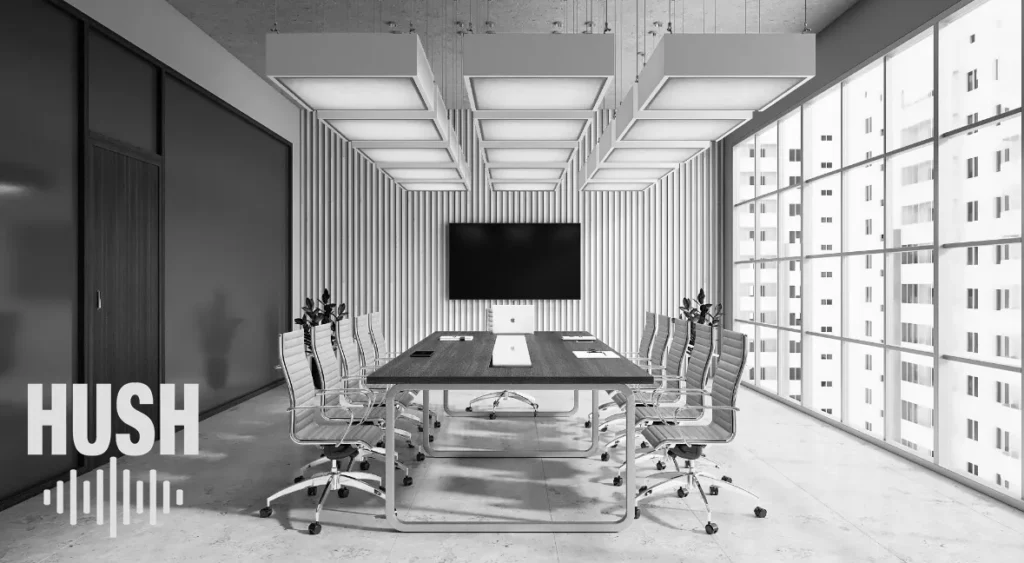
Acoustic Panels for Echo Reduction in NYC
Echo is not a volume problem; it is a reflection problem. Acoustic treatment, meaning sound absorbing wall panels, acoustic baffles, bass traps and diffusers placed where reflections actually happen, is how a room gets fixed. A glass-walled conference room where nobody can follow the call, a restaurant where every table shouts, a living room with a hard floor and a flat-screen that sounds like a tin can: these are rooms with too many reflections and nothing to absorb them. Acoustic panels, therefore, fix that. Hush designs, supplies and installs sound absorbing panels across New York City, with the NRC ratings and fire-test documentation that commercial projects require.
Acoustic Panels vs Soundproofing: Read This First
This is the question that saves the most money.
Acoustic panels absorb sound inside a room. In practice, they reduce reverberation (measured as RT60), improve speech clarity, and make a space feel calmer. NRC, the Noise Reduction Coefficient, rates their performance; an NRC of 0.85 means the panel absorbs, on average, about 85% of the sound energy that hits it across the 250–2,000 Hz bands.
Soundproofing blocks sound between rooms. STC rates it, and it requires mass, decoupling and airtight sealing inside the wall.
The labels don’t help. Products sold as “soundproofing panels” or “soundproof wall panels” are almost always absorbers. So they treat echo, not noise from next door. The same is true of most acoustical panels sold in NYC.
Acoustic panels on a shared wall will not stop your neighbour. Similarly, acoustic foam panels in a bedroom will not stop the street. If sound is coming through a wall, ceiling or floor, you need our wall, ceiling or floor soundproofing. If sound is bouncing around inside your room, you are on the right page. Many projects need both, so we will tell you which at the assessment.

Panel Styles We Offer
Acoustic Panel Types
Every panel we install has a documented NRC rating and can be fire-tested for New York code.
Fabric wrapped panels. A rigid mineral wool or fibreglass core wrapped in acoustic fabric. The highest absorption per inch of the wall-mounted options and the most finish choices, which is why they appear in executive and premium conference rooms. In addition, they hide minor wall imperfections.
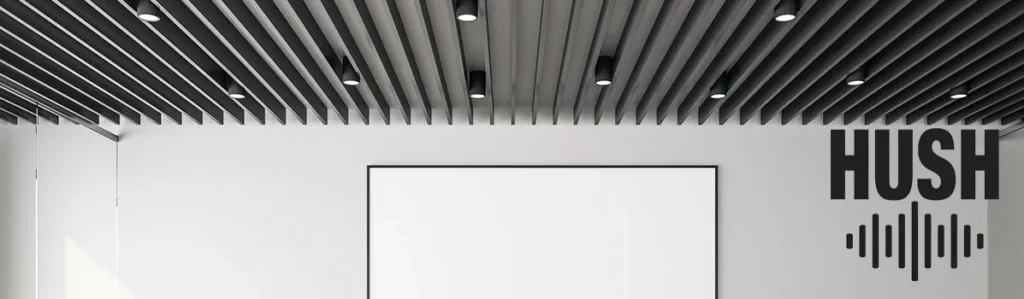
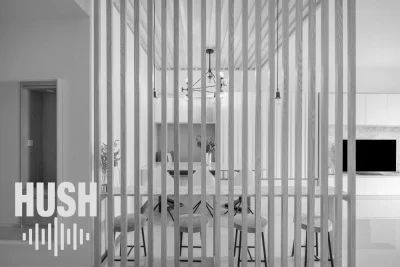
Wood slat acoustic panels. Timber slats over a felt backing. Decorative acoustic wall panels that read as architecture rather than treatment, with real absorption from the felt behind the gaps. They are also popular in residential living rooms, lobbies and hospitality.
Studio panels. Tuned for critical-listening rooms; see our studio acoustic panels.
Custom panels. Any dimension, finish or shape, including printed-fabric acoustic art panels.
Felt Acoustic Panels
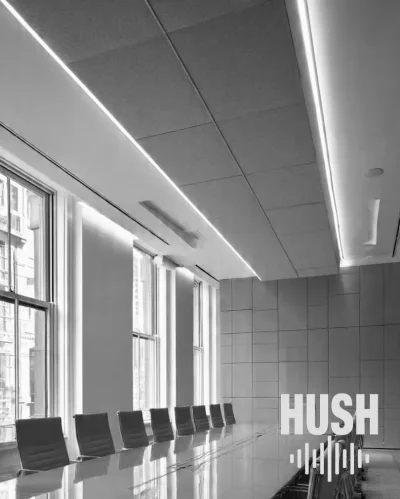
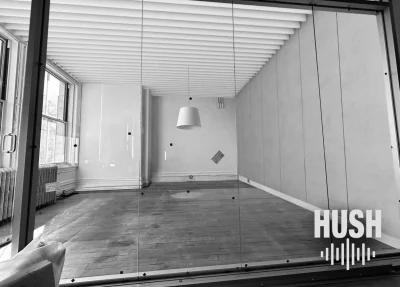
Felt acoustic panels. A dense PET felt with a soft, modern look and a slim profile. It gives broad mid-to-high-frequency absorption, which is exactly the speech range. Felt suits glass-and-concrete offices, corridors and open plans, and comes as flat wall panels, slat designs and modular tile layouts.
Rigid Insulation Panels
Rigid insulation panels. Higher absorption and durability for large rooms and commercial build-outs where panels may be touched or bumped.
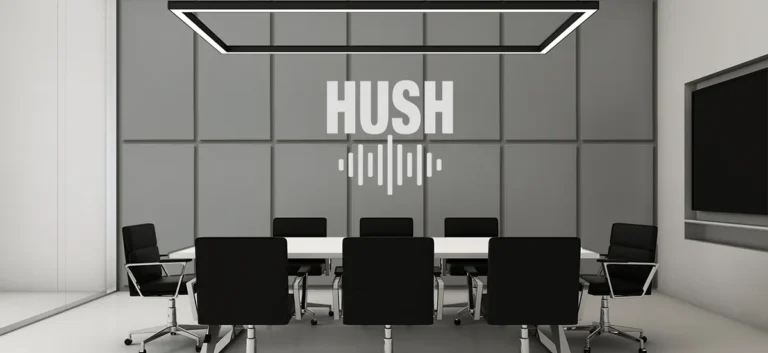
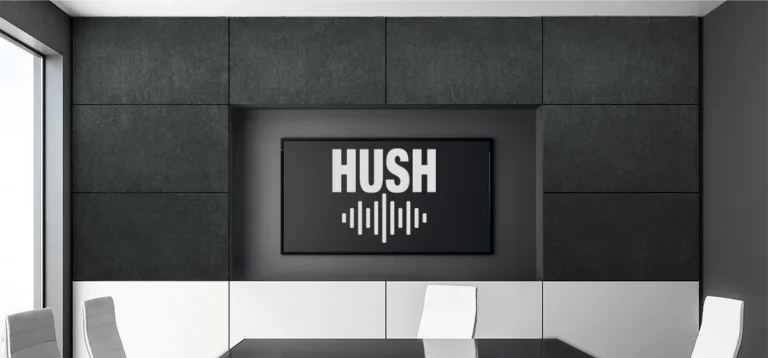
Mineral Wool Filled Acoustic Panels
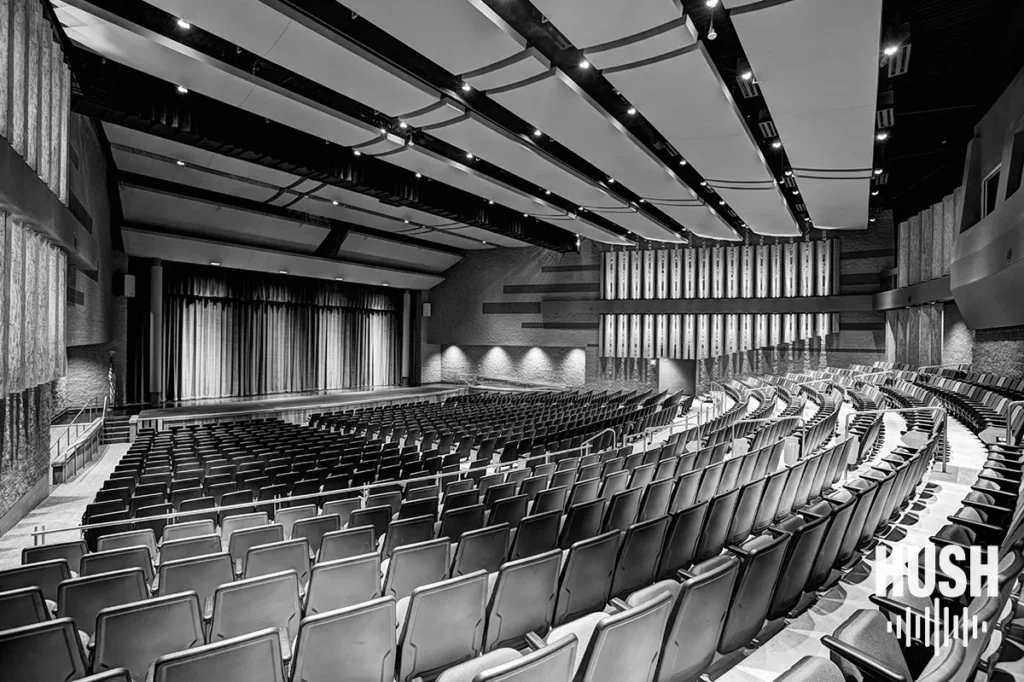
Mineral wool filled panels. Broadband absorption that reaches further into the low-mid range than thin felt. Specify them when reverberation time needs to drop substantially: lecture rooms, restaurants, auditoriums.
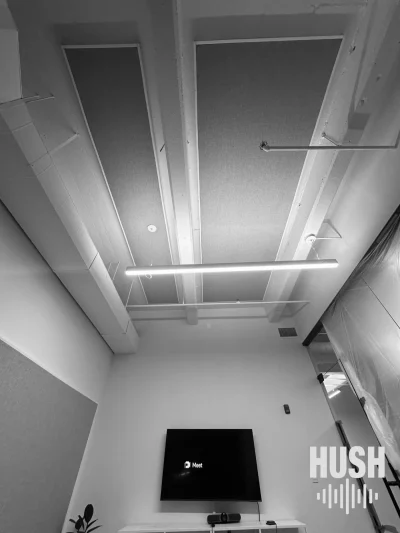
Acoustic Ceiling Panels, Baffles and Clouds
When walls are glass or full of windows and doors, the ceiling is where the absorption goes.
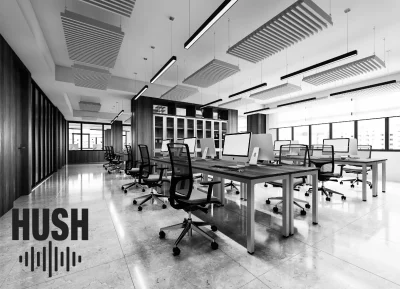
Ceiling baffles hang vertically from the structure in rows. Because sound hits both faces, a baffle absorbs more per square foot of material than a flat panel, and baffles leave the walls untouched. They suit open offices, event spaces and restaurants, and we coordinate the layout with lighting, sprinklers and HVAC so nothing gets blocked.
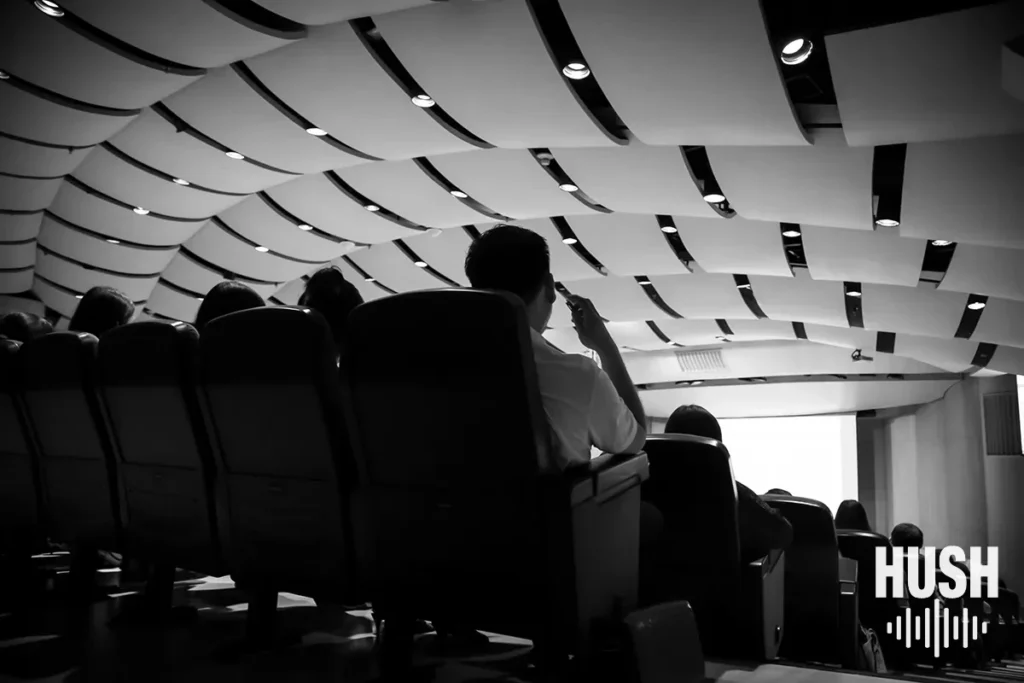
Acoustic ceiling clouds are flat panels suspended horizontally below the deck. In particular, they treat the first reflection off the ceiling above a conference table or dining area and can carry integrated lighting.
Direct-mount acoustic ceiling panels attach flat to the ceiling where there is no height to spare.

Bass Traps and Diffusers
Flat panels absorb mid and high frequencies well and low frequencies poorly. So two more tools handle what panels miss.
Bass traps are thick (four inches and up) mineral wool absorbers placed in corners, where low-frequency pressure builds. For example, they tighten the boom in a home theatre, a drum room or a bar’s DJ booth. They do not stop bass from leaving the room; that is a soundproofing job.
That corner build-up comes from room modes, also called standing waves. These are low-frequency resonances set by the room’s dimensions, and they pile up in corners. Where a porous trap can’t reach low enough, membrane or Helmholtz resonators absorb the bass that panels miss.
Acoustic diffuser panels scatter reflections instead of absorbing them. A room with absorption on every surface sounds dead; a slatted wooden diffuser on the back wall keeps the room alive while removing the harsh slap. Studios, performance spaces and home theatres use both absorption and diffusion, and the balance is what an acoustic design sets.
Mounting and Installation
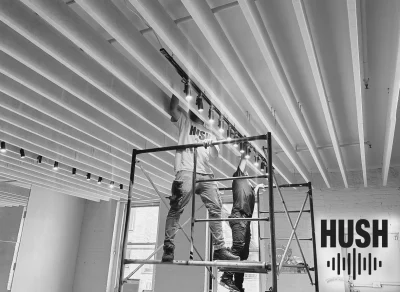
Suspension is by aircraft cable or a proprietary grid; wall panels mount on concealed Z-clips or adhesive where the wall allows. Our own crews handle acoustic panel installation across NYC, with closeout documentation for commercial projects.
Mounting also changes performance. Porous absorbers work best when their thickness, plus any air gap behind them, approaches a quarter of the sound’s wavelength. So spacing a panel off the wall extends its low-frequency absorption. In contrast, a thin panel glued flat barely touches bass.
How We Measure Results
Before: a reverberation reading (RT60) and a walk-through listening for flutter echo and harsh reflection points. Design: coverage calculated against a target RT60 for the room’s use, with panel type and placement chosen for the frequencies that are actually a problem. Finally, a second RT60 reading confirms the result. For event spaces, theatres and performance venues we prepare a full acoustical report covering RT60, speech intelligibility, absorber and baffle coverage, and diffuser placement.
That calculation uses Sabine’s equation, which ties RT60 to the room’s volume and its total absorption, measured in sabins. As a result, we can estimate how much panel area a room needs before anything goes on the wall. However, the Eyring equation is the better fit for heavily treated rooms. C.F. Eyring’s 1930 reverberation formula is more accurate than Sabine’s when a room has a lot of absorption.
Every product we install has a documented NRC rating and, where required, a fire-testing affidavit and installation certification for the building file.
Acoustic Panels for Contractors, Architects and Developers
For build-outs we provide product recommendations against the design intent, NRC and fire-test documentation for submittals, installation sequencing with the other trades, and field installation with closeout documentation. We can also scope panel packages per room or per floor.
Where Acoustic Panels Go
In most cases, the placement does more than the quantity. So knowing where to place acoustic panels saves money. Conference room acoustic panels, office acoustic panels and home theater acoustic panels are the same products in different positions.
- Conference rooms: first-reflection points on the side walls, the back wall behind the screen, and the ceiling above the table. Keep the layout symmetrical so that video-call audio stays balanced. Treat glass partitions with wall and ceiling absorption, since the glass itself cannot be treated, and seal door and perimeter leaks that let the next room’s conversation in.
- Open offices: ceiling baffles across the floor plate, plus felt wall panels at the ends of long runs where flutter echo lives.
- Restaurants and bars: baffles or clouds over the dining floor, mineral wool panels on the back wall, and nothing over the kitchen pass. See restaurant soundproofing and bar soundproofing.
- Home theatres and living rooms: first-reflection points beside the listening position, bass traps in the front corners, a diffuser or slat wall behind the sofa.
- Schools, churches and auditoriums: reverberation targets by room use, with a measured RT60 before and after. See church soundproofing and auditorium soundproofing.
- Outdoor acoustic panels for terraces and rooftop bars are weather-rated versions of the same products and we choose them for durability first.
DIY Acoustic Panels and Acoustic Foam
People often ask whether they can build their own. For a home office, a frame of mineral wool wrapped in fabric is a legitimate DIY acoustic panel and works well if it is thick enough. Where DIY falls short is coverage calculation, placement, fire rating in a commercial space, and anything suspended from a ceiling. Acoustic foam panels (the wedge-shaped kind) absorb only high frequencies and are often not fire-rated; they are a fit for a closet vocal booth and little else.
Acoustic Panel Cost in NYC
Design, supply and installation averages $5,000 to $30,000 per room for rooms of 150 square feet and up, depending on panel type, coverage and mounting. We quote contractor packages and multi-room commercial projects per scope. Consultations are $250 virtual or $500 on-site, and we then credit the fee toward the project. Full context is on our soundproofing cost page.
Acoustic Panels FAQ
Do acoustic panels soundproof a room?
No. Instead, they reduce echo inside the room. To stop sound passing through a wall or ceiling you need soundproofing, which is a different construction.
How many acoustic panels do I need?
It depends on the room’s volume, surfaces and use, which is why we measure RT60 and calculate coverage rather than guess. A typical conference room needs 20 to 35 percent of its wall area treated; a restaurant often needs the ceiling.
What NRC rating should I look for?
NRC 0.8 or higher for the primary absorbers in speech-critical rooms. Thin decorative panels at NRC 0.4 to 0.5 can supplement but should not carry the room.
Are acoustic panels fire-rated?
Ours can be, and in fact for commercial spaces in New York they need to be. We also provide the test documentation.
Can I put acoustic panels on the ceiling?
Yes. Baffles, clouds and direct-mount panels are often the best option when walls are glass.
Do bass traps stop bass from leaving the room?
No. They control low-frequency build-up inside the room. Containing bass is a soundproofing problem.
Our Clients
Client partners include residential, commercial, and institutional organizations that rely on precise soundproofing and acoustical execution.

IN-PERSON CONSULTATION
Contact Hush Soundproofing today! Our expert team is ready to assess your space and provide customized solutions to create a peaceful and quiet environment.
Book an Acoustic Assessment
Hush is a licensed New York City contractor with an in-house acoustic team, based in Brooklyn and serving all five boroughs. We will measure your room, tell you what it needs, and install it.
Related: Sound Absorbing Material · Studio Soundproofing · Office Soundproofing · Conference Room Soundproofing · Wall Soundproofing · Acoustic Report · Soundproofing Cost NYC