

Wood Slat Acoustic Panels
Wood Slat Acoustic Panels
Wood slat acoustic panels deliver a clean architectural look while controlling reflections. They combine a slatted wood face with an absorptive backing, so the room stays lively but less chaotic. In other words, they’re a strong choice when you want design-forward acoustic control without the “studio foam” look.
Where wood slat panels perform best
Slat systems are ideal when you want absorption plus texture. Therefore, we often specify them for:
- Reception areas and lobbies (less reverb, stronger first impression)
- Offices and conference rooms (cleaner speech and reduced fatigue)
- Restaurants (reduced “room roar” while keeping energy)
- Living rooms and media rooms (better clarity without deadening the space)
If your room still feels harsh, you may need additional absorption. Start with sound absorbing material to understand how coverage and placement work.
How slat systems work (and how we specify them)
Performance is not just “wood vs no wood.” Spacing, backing, and the cavity behind the system matter. As a result, we specify slat panels as a system, not a decorative surface.
- Slat spacing: controls how much sound reaches the absorber behind.
- Backing: absorptive layer drives most of the reflection control.
- Cavity: a controlled air space can extend performance and improve consistency.
- Placement: first reflections first, then balance the room.
Why does the cavity matter? Porous backings like felt and mineral wool absorb best at depths near a quarter of the sound’s wavelength. An air gap behind them counts toward that depth. Low notes have long wavelengths, so a deeper cavity pushes absorption lower. In contrast, a thin system glued flat mostly tames mids and highs. That is why two acoustic wood panels with the same face can perform very differently.
If the real issue is sound transfer, treat isolation first with wall soundproofing and finish the room with treatment.
Frequently Asked Questions
Are slat panels diffusers? Not automatically. Some slat designs scatter a bit, but most of the “acoustic” effect comes from absorption behind the wood. For studios, we often blend absorption with diffusion strategy. Diffusion scatters reflections instead of absorbing them, so a room stays lively but clear. A purpose-built quadratic residue diffuser, for example, uses wells of different depths to spread sound evenly.
Do slat panels soundproof? No. Instead, they control reflections inside the room. Soundproofing is a separate scope.
Related acoustic panel types:
- Felt Acoustic Panels
- Fabric Acoustic Panels
- Wood Fiber Acoustic Panels
- Studio Acoustic Panels
- Custom Acoustic Panels
Further reading:
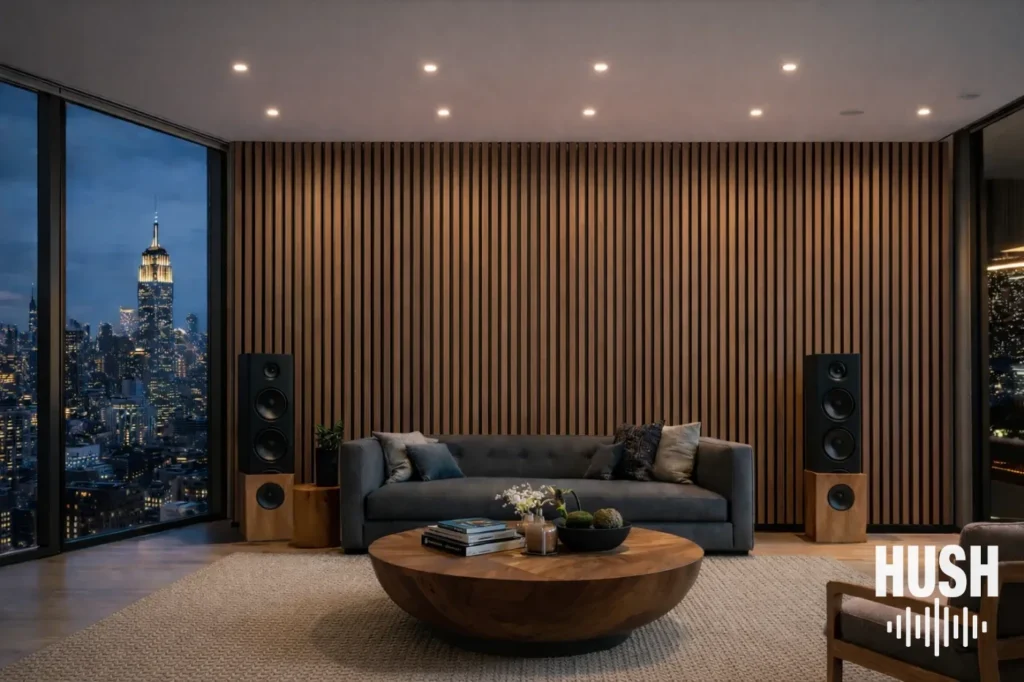
How Wood Slat Acoustic Panels Work
Wood slat acoustic panels pair a row of wooden slats with a sound-absorbing backing, usually acoustic felt or mineral wool. The gaps between the slats let sound pass through to the backing, where it gets absorbed. Meanwhile, the slats themselves scatter some reflections, which keeps the room from sounding too dead. Thanks to that combination, these wood acoustic panels give you both a warm, modern look and real echo control.
Performance depends on three choices: the width of the gaps, the type and thickness of the backing, and whether the panel sits on an air gap. For example, wider gaps and deeper backing absorb more sound, especially in the lower range. We compare options using tested Noise Reduction Coefficient data and model how much they will shorten the room’s reverberation time. As a result, you can choose the finish you love while knowing exactly how it will perform.
Reverberation time (RT60) is how long a sound takes to fade by 60 dB after it stops. Sabine’s equation ties it to the room’s volume and its total absorption. So once we know the room and the panel data, we can estimate how much coverage you actually need.
Wood Slat Acoustic Panels FAQs
Are wood slat panels just decorative?
Not when they’re built properly. With an acoustic backing, wood slat panels absorb a meaningful amount of sound. Decorative slats without a backing, however, do very little.
Where do wood slat acoustic panels work best?
They’re popular in living rooms, home theaters, offices, conference rooms and restaurants, where you want warmth and better sound together.
Can I install wood slat panels on the ceiling?
Yes. In fact, ceiling installations are very effective, because the ceiling is often the largest untreated surface in the room.
Do wood slat panels block sound from neighbors?
No. Like all acoustic panels, they reduce echo inside the room. Blocking sound between rooms requires soundproofing.
Compare felt, fabric and custom panels, or see all acoustic panels.
Our Clients
Client partners include residential, commercial, and institutional organizations that rely on precise soundproofing and acoustical execution.

SCHEDULE A CONSULTATION
Contact Hush Soundproofing today! Our expert team is ready to assess your space and provide customized solutions to create a peaceful and quiet environment.