
Studio Acoustic Panels
Studio Acoustic Panels
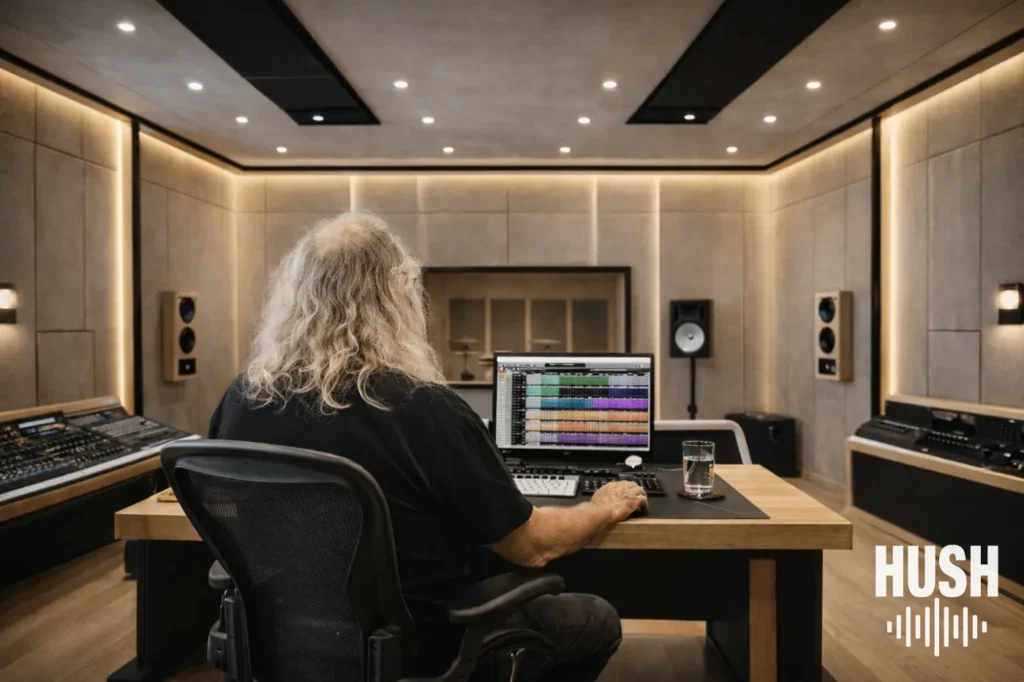
Studio acoustic panels are about accuracy. They control early reflections, tighten imaging, and reduce the smear that masks detail in playback. However, a studio needs two separate strategies: acoustic treatment (inside the room) and soundproofing (between rooms). Therefore, we plan both from the start so you don’t waste money chasing the wrong problem.
What studio panels actually fix
Recording studio acoustic treatment addresses what you hear inside the room. As a result, it improves:
- Mix translation and stereo imaging (cleaner reflection control)
- Speech and vocal capture (less room coloration)
- Listener fatigue (fewer harsh reflections)
- Room balance (absorption where needed, diffusion where it helps)
For a broader studio overview, reference studio soundproofing.
How we plan a studio treatment stack
First, we identify the reflection zones and room behavior. Next, we place studio acoustic panels where they matter most. Then, we add low-frequency control where the room stores energy. Finally, we balance the space so it stays controlled without feeling dead.
- Reflection control: first reflection points, ceiling cloud zones, and rear wall strategy.
- Low frequency: corner management and thicker assemblies where bass builds up.
- Room balance: absorption + diffusion strategy based on use (tracking vs mixing vs playback).
Why the corners? Every room has room modes, also called standing waves. These are low-frequency resonances set by the room’s length, width and height. They pile up in corners, so some bass notes boom while others vanish. That is why we put bass traps there first. In addition, membrane and Helmholtz resonators can target the low notes that thin studio acoustic panels miss.
If isolation is part of the scope, pair this with how to soundproof a room and consider your door as a system component (see soundproof door).
Frequently Asked Questions
Do I need panels everywhere? No. Instead, targeted placement beats random coverage. However, small rooms often need more treatment because surfaces are closer and reflections arrive faster.
Are panels enough for soundproofing? No. Soundproofing instead requires mass, sealing, and decoupling across assemblies.
Related acoustic panel types:
- Felt Acoustic Panels
- Fabric Acoustic Panels
- Wood Slat Acoustic Panels
- Wood Fiber Acoustic Panels
- Custom Acoustic Panels
Further reading:
Placing Studio Acoustic Panels for Accurate Sound
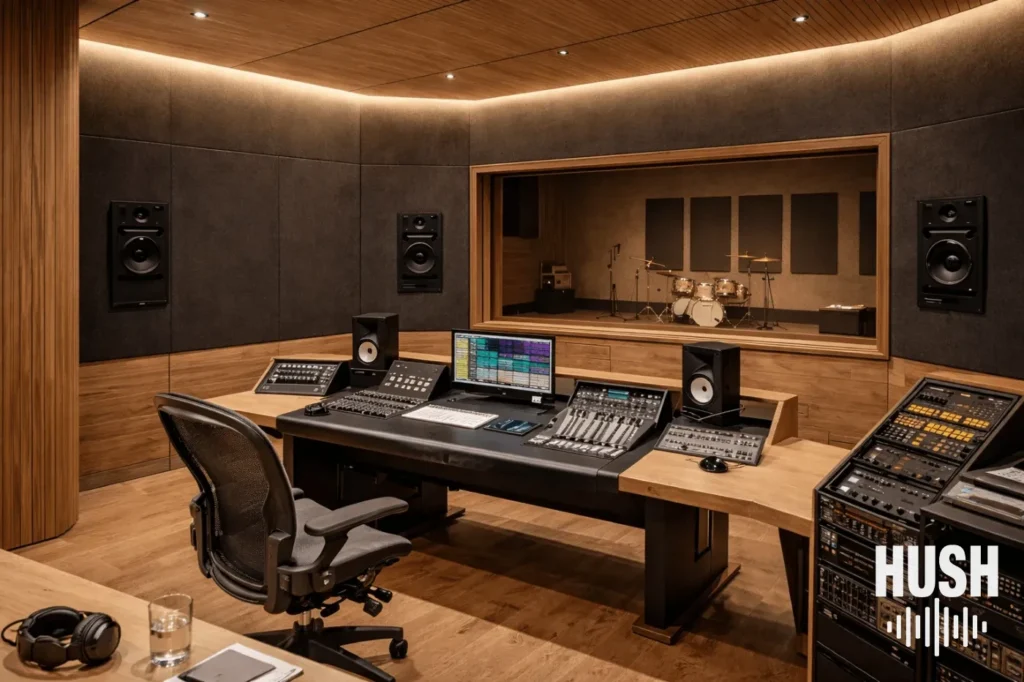
Studio acoustic panels do their best work when you put them in the right places. In a typical mixing room or home studio, the most important spots are the first reflection points on the side walls, the ceiling above the listening position, and the wall behind the monitors. Corners come next, since that’s where bass builds up. In other words, a handful of well-placed panels often beats covering every wall.
We plan treatment around two numbers. First, the reverberation time, which tells us how long sound lingers. Second, each material’s tested Noise Reduction Coefficient; the NYC DEP Residential Noise Control Guidance Sheet suggests looking for panels with an NRC of 0.7 or greater. Moreover, for recording and mixing we look closely at low frequencies, which NRC alone doesn’t capture, so we often pair panels with bass traps and diffusers.
Studio Acoustic Panels FAQs
Do studio acoustic panels soundproof a room?
No. Panels control reflections inside the studio. So to keep sound from leaking to neighbors, you need isolation such as decoupled walls, ceilings and sealed doors.
How many studio acoustic panels do I need?
It depends on the room size and use. Typically, small home studios start with six to ten panels plus corner bass traps, and we fine-tune from there.
Is foam good enough for a studio?
Thin foam mainly absorbs high frequencies. That is because porous absorbers work best when their depth nears a quarter of the sound’s wavelength. Bass waves are many feet long, so an inch of foam barely touches them. As a result, rooms treated only with foam can sound dull yet still boomy. Instead, denser mineral wool or fiberglass panels work far better.
Should I use diffusers or absorbers?
Usually both. Studio acoustic panels control early reflections, while diffusers keep the room sounding natural and spacious.
See studio soundproofing, soundproof studio doors and custom acoustic panels.
Our Clients
Client partners include residential, commercial, and institutional organizations that rely on precise soundproofing and acoustical execution.

SCHEDULE A CONSULTATION
Contact Hush Soundproofing today! Our expert team is ready to assess your space and provide customized solutions to create a peaceful and quiet environment.