
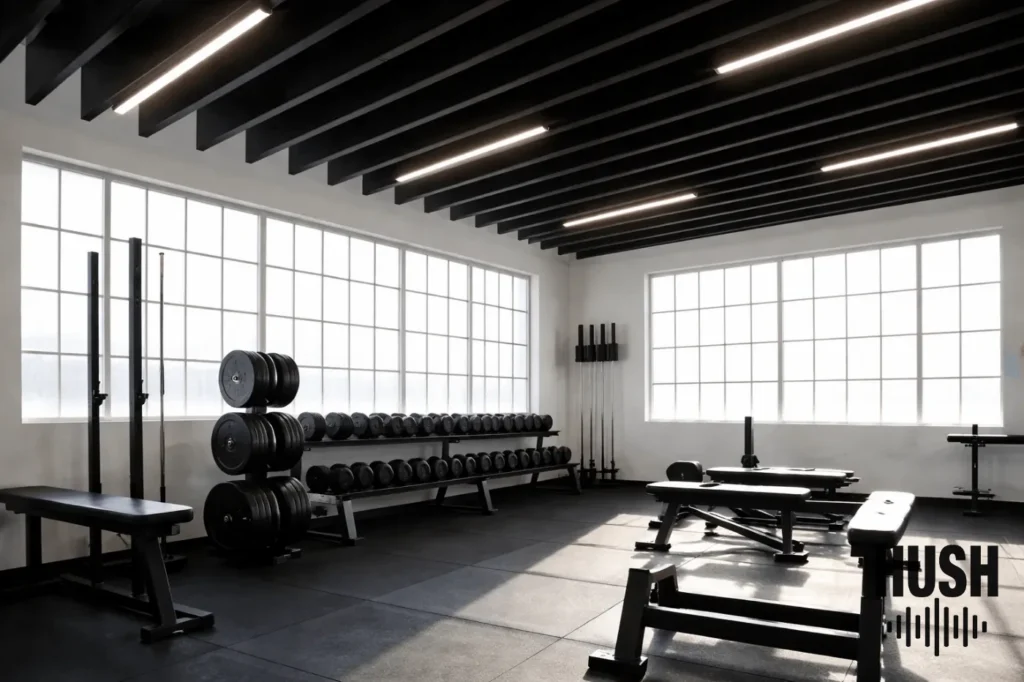
Gym Soundproofing
Gym Soundproofing
Gym soundproofing is driven by impact and vibration. Weights clanking and dropped loads inject energy into the structure, then it re-radiates through ceilings, walls, and adjacent spaces. The right scope combines structural isolation for noise reduction and sound reduction, plus room acoustics for echo reduction and coaching clarity.
What makes gyms hard
- Structure-borne impact: deadlifts, dropped plates, treadmill vibration.
- Flanking: vibration routes around “good walls” through slabs and columns.
- Music + voice: loud playback increases neighbor complaints fast.
- Reverberation: big hard rooms amplify harshness and fatigue.
Isolation systems that actually move the needle
In gym soundproofing, the floor is often the main event. When impact is the driver, we design isolation and damping into the load path.
- Floating floor systems: isolate weight zones so impact energy doesn’t couple into the slab.
- Targeted platforms: engineered lifting platforms where full-room floating isn’t practical.
- Wall/ceiling coordination: when the building demands it, treat adjacent assemblies so vibration doesn’t bypass the floor work.
If noise is being transmitted below or to the side, pair the floor scope with Ceiling Soundproofing and Wall Soundproofing.
Acoustics inside the gym: echo reduction + communication
Even after isolation, gyms can feel painfully loud because of reflections. So we add absorption to reduce echo and improve speech intelligibility for coaching, classes, and safety cues.
- Ceiling absorption: high coverage where reflections build up.
- Wall panels: strategic placement for echo reduction without sacrificing durability.
- Speaker placement: controlled coverage and lower overall volume for the same intelligibility.
Treatment options: Acoustic Panels.
Gym Soundproofing: Dropped Weights, Bass and Neighbors
Gyms and fitness studios in New York often operate under offices or apartments, and they produce some of the hardest noise to control. Dropped weights and kettlebells send powerful impacts straight into the slab, treadmills and bikes add steady vibration, and group classes run bass-heavy music for hours. So gym soundproofing has to deal with all three.
For impact, the key is a properly designed floor. Rubber tiles alone help with small drops, but heavy free-weight areas usually need thick, layered systems or isolated platforms that spread and absorb the energy before it reaches the structure. Floor performance is described by ratings such as Impact Insulation Class, although dropped weights call for testing beyond standard ratings. For music, we isolate speakers and treat ceilings and walls, since amplified sound is covered by the NYC Noise Code. Inside the studio, instructors spend long hours near speakers, so occupational noise guidance from OSHA and NIOSH is worth keeping in mind.
Gym Soundproofing FAQs
Is standard rubber gym flooring enough?
For light use, sometimes. For dropped barbells and heavy dumbbells, however, standard rubber tiles rarely protect the floors below, so we design thicker, layered systems.
Ratings can mislead here, too. IIC ratings under-weight low-frequency thuds, so a high-IIC floor can still pass a dropped barbell’s deep thump. That is why we also review octave-band data at 63 Hz and 125 Hz.
How do you stop treadmill vibration?
Isolation pads or platforms under cardio machines break the direct contact with the floor and cut vibration significantly.
The pad has to suit the machine, though. A properly sized isolator has a natural frequency well below the machine’s running speed, so little vibration passes through.
Can a gym open under apartments in NYC?
Yes, but planning acoustics early is essential. Building a strong floor and ceiling system before opening is far cheaper than fixing complaints later.
Does gym soundproofing need to cover the walls too?
Often, yes, especially for spin and HIIT studios next to offices or other tenants.
Class music is bass-heavy, so we measure it in dBC and octave bands, not just dBA. That is because A-weighting under-reads low frequencies.
See floor soundproofing, commercial soundproofing and acoustic panels.
Our Clients
Client partners include residential, commercial, and institutional organizations that rely on precise soundproofing and acoustical execution.

SCHEDULE A CONSULTATION
Contact Hush Soundproofing today! Our expert team is ready to assess your space and provide customized solutions to create a peaceful and quiet environment.