
Wood Wool Acoustic Panels
Wood Wool Acoustic Panels
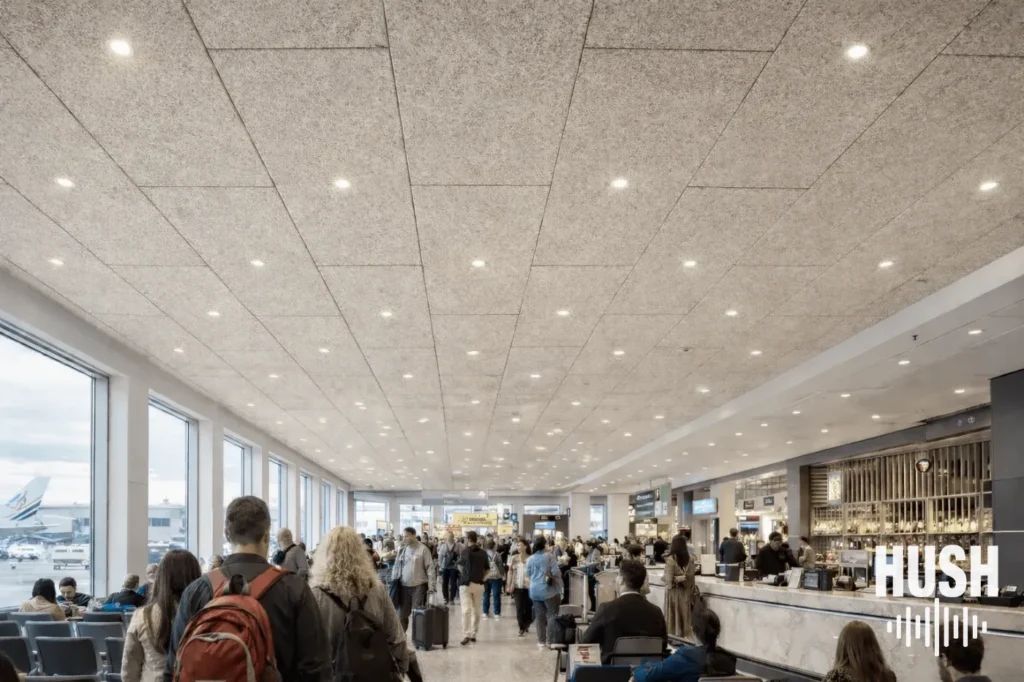
Wood Wool acoustic panels are a practical way to reduce reverberation while keeping a natural, durable finish. They’re often used on ceilings and large wall fields where you need coverage that holds up to daily wear. In addition, they can be a clean option for public-facing spaces that need performance without delicate finishes.
Where wood wool panels make sense
Wood Wool (including wood wool-style systems) is a strong fit when durability and broad coverage matter. Therefore, it performs well in:
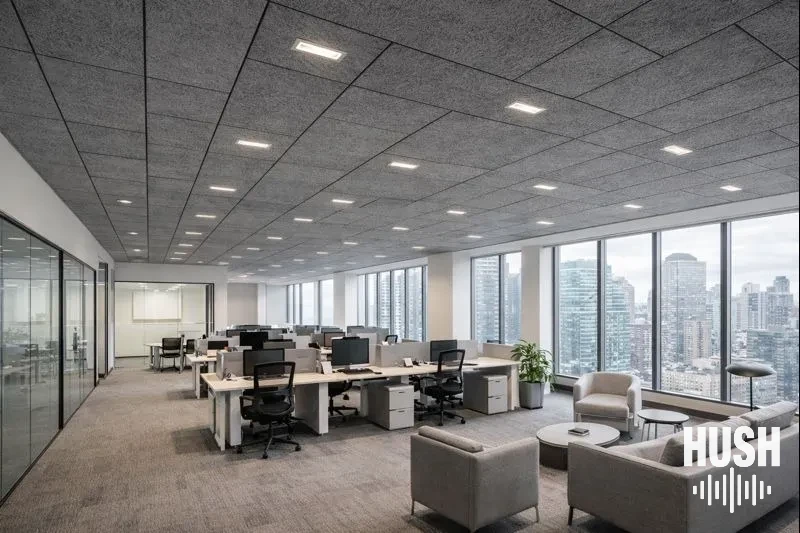
- Ceilings in offices and conference rooms (less reverb, clearer speech)
- Fitness, wellness, and multipurpose rooms (reduced harshness and fatigue)
- Schools, community spaces, and corridors (coverage that holds up)
- Residential common areas where echo builds up quickly
If you’re also dealing with sound transfer between rooms, address isolation first with ceiling soundproofing or wall soundproofing.
How we specify coverage and installation
Large surfaces create long decay times. As a result, wood wool panels often work best when you treat the biggest planes first—usually the ceiling—then add targeted wall treatment as needed.
- Priority: ceilings and long parallel surfaces first.
- Integration: coordinate lighting, sprinklers, diffusers, and access panels early.
- Balance: avoid over-deadening by mixing absorption types when required.
Those long decay times have a name: reverberation time, or RT60. It is how long a sound takes to fade by 60 dB after it stops. Sabine’s equation ties RT60 to room volume and total absorption. So a full ceiling of wood wool acoustic panels shortens it quickly. Long parallel walls also cause flutter echo, a rapid ringing between hard surfaces. Treating one of the two walls usually stops it.
For absorption fundamentals and NRC context, read sound absorbing material.
Frequently Asked Questions
Do wood wool panels soundproof? No. Instead, they reduce echo and improve clarity inside the room.
Should I treat the ceiling or walls first? In many rooms, the ceiling is the highest ROI because it’s a large reflective plane. However, layout and finishes can shift the priority.
Related acoustic panel types:
- Felt Acoustic Panels
- Fabric Acoustic Panels
- Wood Slat Acoustic Panels
- Studio Acoustic Panels
- Custom Acoustic Panels
Further reading:

Why Designers Choose Wood Wool Acoustic Panels
Wood wool acoustic panels are made from long strands of wood bound with cement or magnesite. The result is a tough, textured board with a warm, natural look that suits lofts, offices, schools, gyms and restaurants. Because the surface is open and porous, sound enters the panel instead of bouncing off it. In addition, wood wool is impact-resistant, so it holds up well in busy spaces where softer fabric panels might get damaged.
For performance, we look at tested absorption data, such as the Noise Reduction Coefficient from ASTM C423 testing. Mounting depth matters a great deal: for instance, the same panel absorbs much more low-frequency sound when mounted with an air gap or mineral wool backing behind it. We also consider color, since wood wool takes paint well without losing much absorption if applied correctly. For broader design context, the Whole Building Design Guide’s acoustic comfort resource explains how absorptive surfaces improve comfort.
Wood Wool Acoustic Panels FAQs
Are wood wool acoustic panels durable?
Very. Thanks to the mineral binder, they resist impact and humidity better than many fabric panels, which makes them popular in gyms and schools.
Can wood wool panels be painted?
Yes, but we recommend spray-applied paint so the open surface stays porous and keeps absorbing sound.
Are wood wool panels good for ceilings?
They’re an excellent ceiling choice. In fact, many projects install them directly on the deck or as hanging clouds.
Do wood wool panels help with bass?
On their own they mainly absorb mid and high frequencies. With an air gap or insulation behind them, however, low-frequency absorption improves significantly. That is because porous absorbers work best when their total depth, gap included, nears a quarter of the sound’s wavelength.
Compare felt, fabric and wood slat panels, or see all acoustic panels.
Our Clients
Client partners include residential, commercial, and institutional organizations that rely on precise soundproofing and acoustical execution.

SCHEDULE A CONSULTATION
Contact Hush Soundproofing today! Our expert team is ready to assess your space and provide customized solutions to create a peaceful and quiet environment.