
Automatic Door Bottom Seal
Automatic Door Bottom
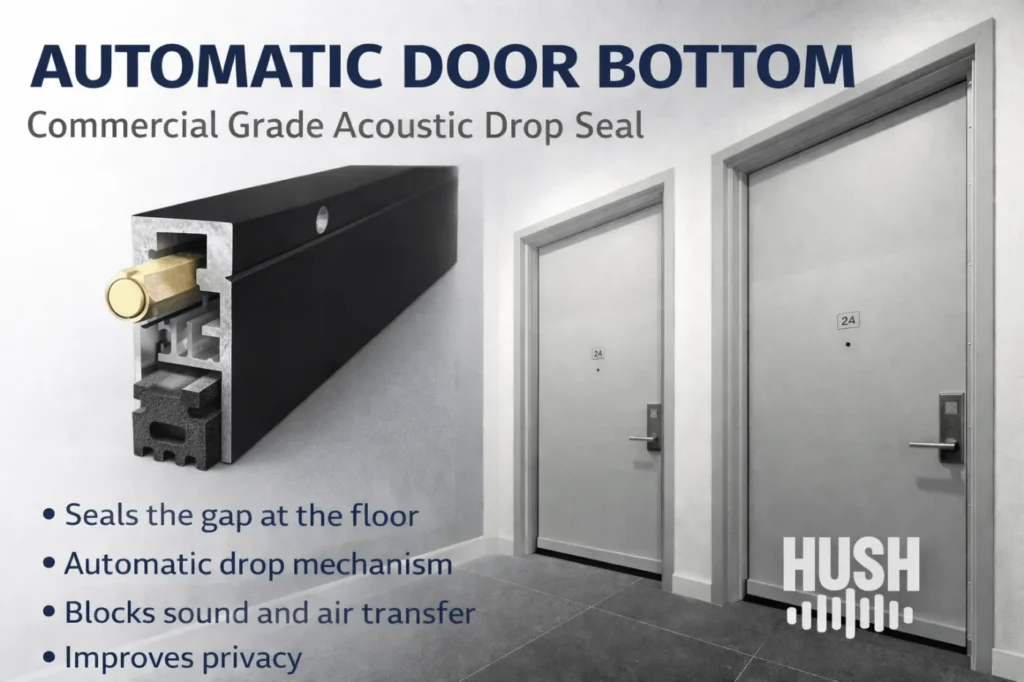
The under-door gap is usually the loudest leak path in NYC apartments and offices. An automatic door bottom (also called a drop bottom seal) closes that gap when the door latches, then lifts as the door opens. Therefore, you get real leakage control without the drag and uneven performance of basic sweeps.
Installed Seal Package: $1,440 per door (automatic door bottom + door perimeter seal).
Two mounting options
We select the style based on door construction, clearance, and finish expectations.
- Under-door (recessed): mounted inside the door for a cleaner look and protected mechanism.
- Surface-mounted: installed on the face of the door when thickness or site conditions limit recessed hardware.
Where automatic door bottoms make sense
- Apartment entry doors: hallway voices and elevator lobby spill.
- Office doors: meeting-room privacy and reduced speech transfer.
- Hotel room doors: corridor noise control without replacing the door.
- Rated openings: when the opening must stay appropriate for its fire-rating and hardware configuration.
Why this matters for hallway noise
In high-rises, corridors behave like long acoustic ducts. As a result, an open undercut can let hallway voices, elevator lobby activity, and building noise bleed into the unit even when the walls are decent. So closing the undercut lowers the noise floor and improves speech privacy quickly.
Field tuning (where the results come from)
Floors are rarely flat, and undercuts vary. For that reason, we tune the drop height so it seals without binding. In addition, we confirm latch engagement, because the seal must compress at the same time the door reaches full closure. If the door is warped or unstable, we may recommend a full soundproof door system instead of forcing hardware onto a failing opening.
How an Automatic Door Bottom Seals the Biggest Gap
On most doors, the gap at the bottom is the single largest sound leak. Even a well-built solid door can lose much of its performance through a half-inch undercut. An automatic door bottom fixes that. It’s a seal mounted in or on the bottom of the door that stays up while the door swings, then drops down onto the floor the moment the door closes. Because it lifts when the door opens, it doesn’t drag on carpet, rugs or thresholds.
What about a soundproof door sweep or an under door noise blocker? Both help a little. However, a sweep drags across the floor, so it wears and rarely seals evenly. A loose blocker, meanwhile, only seals while it stays snug against the floor. For lasting soundproofing under the door, a drop seal that lands flat on every closing works better.
The NYC DEP Residential Noise Control Guidance Sheet recommends rubber or vinyl gasketing around and, if possible, under doors, and an automatic door bottom is the cleanest way to seal the underside. We usually pair it with a full door perimeter seal on the head and jambs, so the door is sealed on all four sides.
Why does one gap matter so much? Because leak area caps performance. A small unsealed opening can hold a door far below its rated STC, no matter how heavy the slab is. That is also why labs test doors as complete systems, with slab, frame and seals together (for example, ASTM E1408). Our guide to STC and IIC ratings explains how those numbers work.
Automatic Door Bottom FAQs
Do I need a threshold with an automatic door bottom?
Not always. For example, on a smooth, level floor, the seal can close directly against it. On uneven or textured floors, however, a low threshold gives the seal a consistent surface to press against.
Can an automatic door bottom be added to an existing door?
Yes. Surface-mounted versions attach to the face of the door, while mortised versions fit into a routed slot for a hidden look. So we pick the type based on your door and finish.
Will it work on a fire-rated door?
Some automatic door bottoms are listed for use on fire-rated doors. We check the listing so the door stays compliant.
How much quieter will my room be?
It depends on the door and the gap. However, sealing the bottom of a door is often one of the most noticeable, best-value upgrades you can make.
See our door soundproofing service and the full range of soundproof doors.
Our Clients
Client partners include residential, commercial, and institutional organizations that rely on precise soundproofing and acoustical execution.

SCHEDULE A CONSULTATION
Contact Hush Soundproofing today! Our expert team is ready to assess your space and provide customized solutions to create a peaceful and quiet environment.