
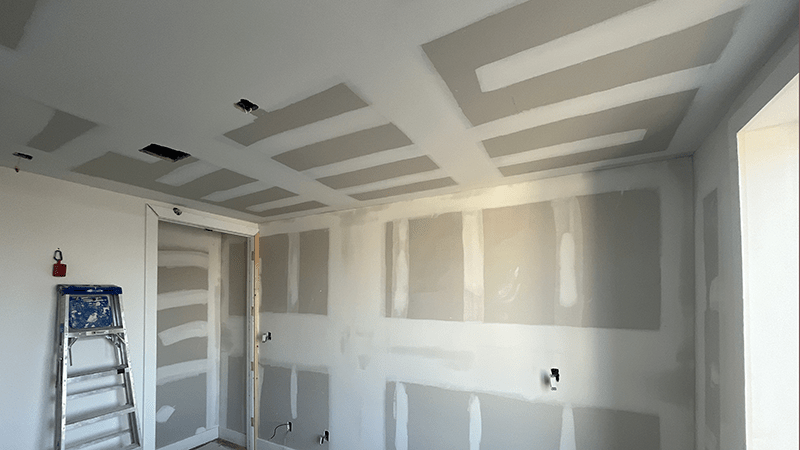
Soundproof Apartment Ceiling
A Soundproof Apartment Ceiling is rarely one product. It is a ceiling assembly that controls impact noise, air leakage, and vibration paths. In most apartments, you hear footsteps because the structure carries energy. Then your ceiling re radiates it into the room.
You also need to manage outbound noise. Instruments, parties, and home theaters create real risk in dense buildings. Start with your building rules and the NYC Noise Code. Then build a plan that matches the construction.
What Soundproofing Means in an Apartment
Soundproofing reduces sound transfer through walls, floors, and ceilings. In ceilings, two noise types dominate. Airborne noise includes voices and music. Impact noise includes footsteps and chair drag. Performance metrics like STC and IIC describe ceiling and floor assemblies, not single materials. A classic housing acoustics reference explains how these ratings relate to real assemblies in multifamily buildings: STC and IIC criteria for housing.
Reasons to Soundproof Your Apartment Ceiling
A Soundproof Apartment Ceiling pays off when noise affects sleep, focus, and privacy. It also lowers conflict with neighbors. Most people notice the change at night first. Footsteps stop pulling your attention. The room feels steadier.
- Sleep improves because impact peaks drop.
- Phone calls feel private because voices stop cutting through.
- Music stays inside your unit because the ceiling stops acting like a radiator.
How to Soundproof Apartment Ceilings
Start with the lowest disruption steps. These do not “solve” impact noise, but they reduce overall annoyance. They also improve the performance of any later ceiling work.
- Seal obvious air leaks. Focus on gaps at trim lines, pipe penetrations, and around ceiling devices where you can legally access them.
- Improve doors and windows. Weatherstripping reduces drafts and also cuts sound that rides on air movement. The Department of Energy outlines practical weatherstripping methods that translate well to apartments.
- Add soft finishes. Rugs and heavy curtains reduce reflections and lower harshness, even when the ceiling stays unchanged.
Next, decide if you need construction. A real Soundproof Apartment Ceiling usually needs decoupling. It also needs mass, damping, and cavity absorption. That combination targets the physics behind footsteps and vibration.
If you want the professional approach, start with an on site soundproofing consultation. Then use a ceiling scope that matches your structure. For higher performance ceilings, our ceiling soundproofing systems focus on isolation, resonance control, and clean detailing.
Ceiling Assemblies That Perform
A strong ceiling plan follows a repeatable sequence. First, stop leaks. Next, break vibration paths. Then add mass and damping. Finally, absorb energy inside the cavity so the bay does not amplify the problem.
- Airtight detailing. Seal perimeters and penetrations so sound cannot shortcut the assembly.
- Decoupling. Use isolation clips and channel to separate the finish plane from the structure.
- Cavity absorption. Fit mineral wool correctly to reduce resonance buildup.
- Mass and damping. Add layered gypsum and specify damping when the scope calls for it.
Common Materials Used for a Soundproof Apartment Ceiling
You rarely need every item below. However, most high performing ceilings combine several. The winning factor is how the system works together and how the installer avoids rigid bridges.
- Mineral wool insulation
- Mass loaded vinyl MLV
- Sound rated drywall
- Viscoelastic damping compound
- Resilient isolation clips and channel
- Acoustical sealant at perimeters
- Putty pads for electrical boxes when applicable
Mistakes That Make Ceilings Underperform
Most ceiling failures come from shortcuts. People add surface foam. People skip sealing. People build a decoupled ceiling and then bridge it at the edges. You can avoid most of that with a clean scope.
- Do not rely on thin foam panels for sound isolation.
- Do not leave open gaps at perimeter lines.
- Do not let screws or framing tie the finish plane back to the structure.
- Do not ignore flanking routes through chases, risers, and mechanical pathways.
If you want adjacent surfaces handled as a system, wall work often pairs with ceiling work. This is especially true when sound flanks around the ceiling line. See how that coordination works in apartment wall soundproofing.