

If you live near a subway line, you already know the sound. Sometimes it is a roar through an open window. Other times it is a low rumble you feel more than hear, even with every window shut. Both are subway noise, but they travel by very different paths. Because of that, they need very different fixes.
This guide explains airborne noise versus structure-borne noise, how loud NYC transit really is, and what you can do about each.
How Loud Is NYC Subway Noise?
Researchers from the University of Washington and Columbia’s Mailman School measured noise across New York’s transit system. They found MTA subways had the highest average noise of any NYC transit mode, at 80.4 dBA. In addition, the loudest single reading, 102.1 dBA, was taken on a subway platform (University of Washington, 2009).
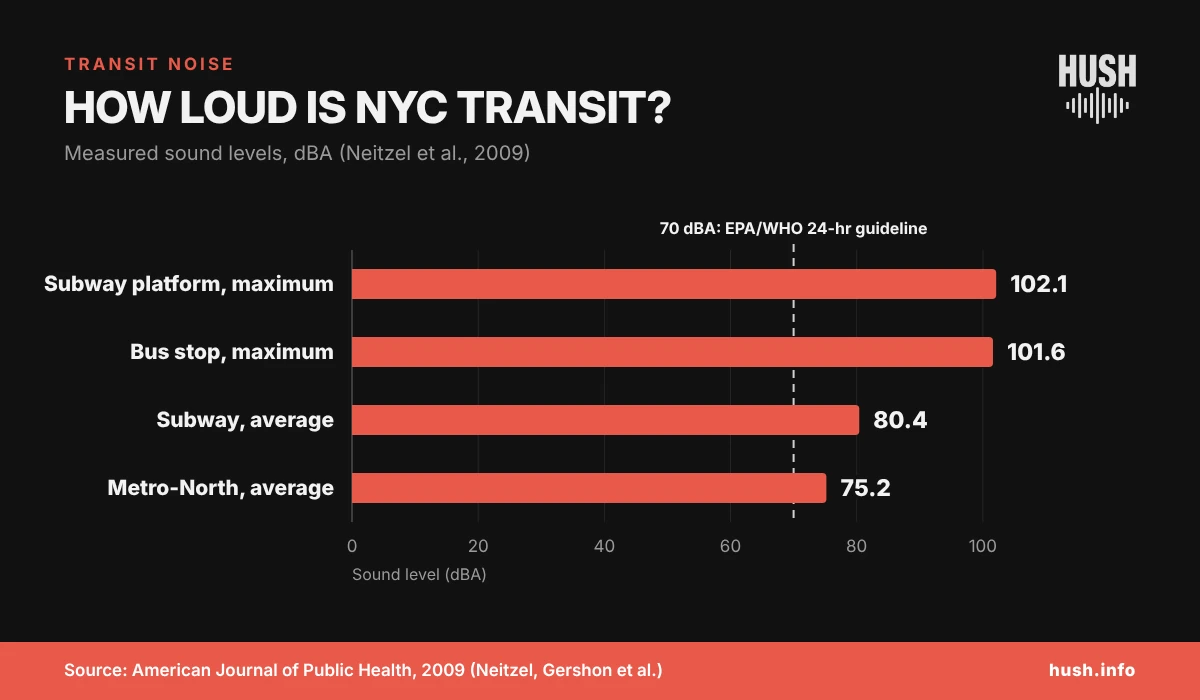
Those are levels for riders. At home, the question is how much of that energy reaches your rooms, and by which path.
Airborne vs. Structure-Borne Subway Noise
Sound reaches an apartment in two main ways:
- Airborne noise travels through the air. It comes in through vents, windows, gaps and grates. You hear it as a whoosh or roar, and it is louder with the window open.
- Structure-borne (ground-borne) noise starts as vibration. Trains shake the tunnel, the vibration moves through soil and foundations, and then your walls and floors radiate it as sound.
Federal transit guidance describes ground-borne noise as the rumble “radiated from the motion of the room surfaces, even when the motion itself cannot be felt” (FRA, Hudson Tunnel FEIS, Ch. 12B). In other words, closing the window will not stop it.

How Much Rumble Is Too Much?
Federal criteria for homes set limits on indoor ground-borne noise, based on how often trains pass:
| Train frequency | Ground-borne vibration limit | Ground-borne noise limit |
|---|---|---|
| Frequent (more than 70 events a day) | 72 VdB | 35 dBA |
| Occasional (30 to 70 a day) | 75 VdB | 38 dBA |
| Infrequent (fewer than 30 a day) | 80 VdB | 43 dBA |
Most NYC subway lines run far more than 70 trains a day. So the strictest row is the one that applies. A rumble of 35 dBA sounds quiet on paper. Still, it is low in pitch and repeats every few minutes, which is why it bothers so many people at night.
How to Reduce Subway Noise at Home
For airborne noise
- First, seal gaps around windows, AC sleeves and vents.
- Next, add interior window inserts or upgrade to laminated, well-sealed windows.
- Also, treat sidewalk-level grates and openings if you control the space.
For structure-borne noise
- Use decoupled assemblies. Isolation clips and channels keep new walls and ceilings from touching the vibrating structure.
- Consider floating floors on isolation pads in the worst rooms.
- Add mass and damping to new layers so they do not ring.
Structure-borne fixes take more work, so measure first. An assessment shows which path dominates. As a result, you spend money where it makes a difference. Our page on city soundproofing for subway noise covers the build-ups we use, and our floor soundproofing page explains isolated floors.
Which Rooms to Treat First
Bedrooms come first because rumble does the most harm to sleep. After that, focus on rooms with walls or floors closest to the line. Basement and ground-floor units usually feel the most vibration, while upper floors hear more airborne noise from elevated sections and street grates.
Not sure which kind of subway noise you have? Book a consultation, and we will tell you before you spend anything.
Subway Noise FAQ
Why can I hear the subway with my windows closed?
You are likely hearing structure-borne noise. Vibration travels through the ground and the building, and your walls and floors turn it back into sound.
Do soundproof windows stop subway rumble?
They help with airborne noise only. Rumble through the structure needs decoupled walls, ceilings or floors.
Which floors are best for avoiding subway noise?
Higher floors usually feel less ground-borne vibration. However, they may hear more airborne noise from elevated tracks and street traffic.
Can the MTA reduce subway noise near my building?
Track maintenance, rail grinding and resilient fasteners can help at the source. You can report concerns, but changes at home are usually faster.
How do I know if a fix will work?
Measure before and after. A consultant can record vibration and sound levels, so you can see the change in numbers.