

Sirens, horns, buses and, in many neighborhoods, a steady parade of helicopters. Helicopter noise in NYC has become one of the fastest-growing complaints in the city. Yet for most apartments, the fix for helicopter noise is the same as the fix for street noise: better windows. This guide covers the numbers, the rules for landmark buildings, and what really works.
Helicopter Noise in NYC by the Numbers
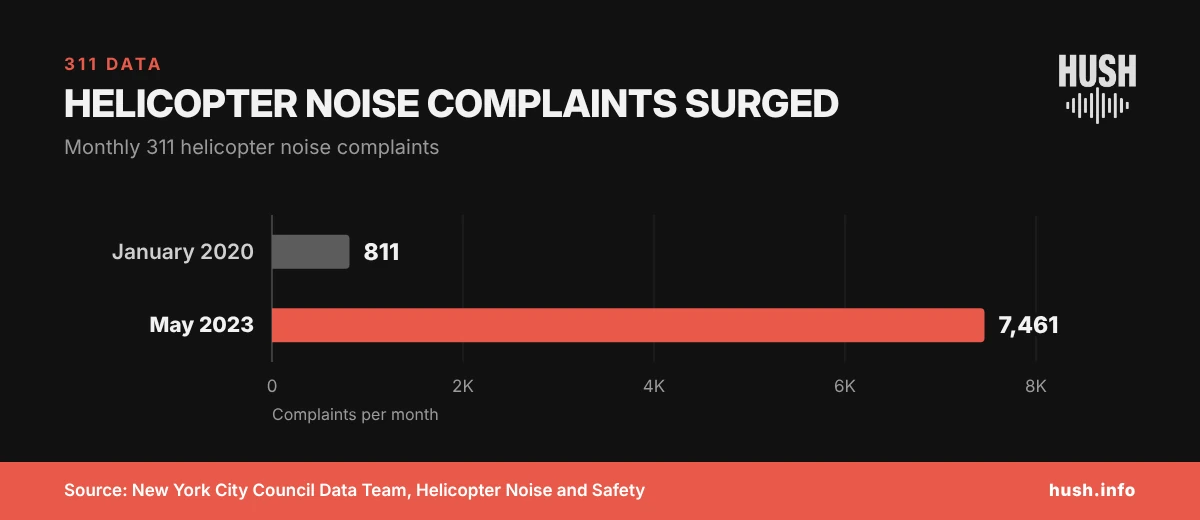
Complaints about helicopter noise in NYC have climbed sharply. According to the City Council’s data team, 311 received 811 helicopter noise complaints in January 2020. By May 2023, the monthly total had reached 7,461, and the full year 2023 saw 59,127 complaints (NYC Council Data Team).
Complaints are also concentrated. In 2020, THE CITY reported that a single East Side community board, covering 14th to 59th Streets, logged 2,106 helicopter complaints in ten months (THE CITY, 2020). So if you live near the East River or a heliport route, you are not imagining it.
Why NYC Helicopter Noise Is So Hard to Block
Helicopter rotors create strong low-frequency sound, and that is the core of the NYC helicopter noise problem. Low tones pass through glass more easily than high tones, and they travel far. As a result, a closed single-pane window does little. In addition, helicopters approach from above, so sound hits windows and roofs from angles that street-level barriers cannot block.

Windows: Where Street and Helicopter Noise Gets In
In most apartments, windows are the weakest part of the outside wall. Therefore, upgrades there give the biggest gain:
- Interior window inserts. These add a sealed second pane inside the existing window. The air gap is key to blocking low frequencies.
- Laminated acoustic glass. A damping layer inside the glass reduces sound transmission, especially at mid frequencies.
- Better seals. Even the best glass fails if air leaks around the sash.
- AC sleeves and vents. Seal or baffle these, or they become the new weak point.
Landmark Buildings: What Is Allowed
Many New Yorkers live in landmarked buildings or historic districts. Good news: the Landmarks Preservation Commission’s permit guidebook lists interior storm windows with clear glazing as work that generally does not need an LPC permit, as long as they do not need mullions, muntins or wide frames (LPC Permit Guidebook, Windows). Replacing windows on a primary facade is stricter, so inserts are often the simplest route. Check with LPC for your specific building.
Roofs and Top Floors
Top-floor apartments hear helicopters through the roof as well as the windows. In that case, a decoupled ceiling with added mass helps. See our ceiling soundproofing page for assemblies that also handle rain and rooftop equipment noise.
What You Can Do Beyond Soundproofing
- Report it. First, file helicopter noise complaints with 311. The data shapes city policy.
- Track flights. Next, note times and directions. Patterns help your elected officials press for changes.
- Protect the bedroom first. Then upgrade the window where you sleep before anything else.
Want to know how much a window upgrade will help your apartment? Book a consultation, or read our guide to how to soundproof a room.
Helicopter Noise NYC FAQ
Where do I report helicopter noise in NYC?
Call 311 or file online. Include the time, location and direction of the flight if you can.
Do soundproof windows block helicopter noise in NYC apartments?
They reduce it a lot, especially inserts with a wide air gap. Low-frequency rotor noise is hard to block completely, though.
Can I install window inserts in a landmark building?
Interior storm windows with clear glazing generally do not need an LPC permit. Confirm the details for your building with LPC.
Are helicopter tours still flying over Manhattan?
Tour and commuter flights still operate from local heliports and nearby airports. Routes and rules continue to change, so check the latest city updates.
What is the cheapest way to reduce street noise?
Seal window gaps and AC sleeves first. After that, interior inserts usually give the best value.