

A walkthrough tells you how an apartment looks. However, it rarely tells you how it sounds at 11 p.m. on a Friday, or at 6 a.m. when the boiler kicks on. That is why more New York buyers now book a pre-purchase acoustic inspection before they sign a contract. In short, it is a home inspection for noise.
This guide explains what the inspection covers, what it costs, and how buyers use the results to negotiate. It also covers what to do if you have already closed and the noise shows up after move-in.
What Is a Pre-Purchase Acoustic Inspection?
A pre-purchase acoustic inspection is a short site visit by an acoustical consultant before you commit to a home. The consultant listens, measures and traces where sound is coming from. For example, they check party walls, the ceiling below the upstairs unit, windows facing the street, and nearby mechanical equipment.
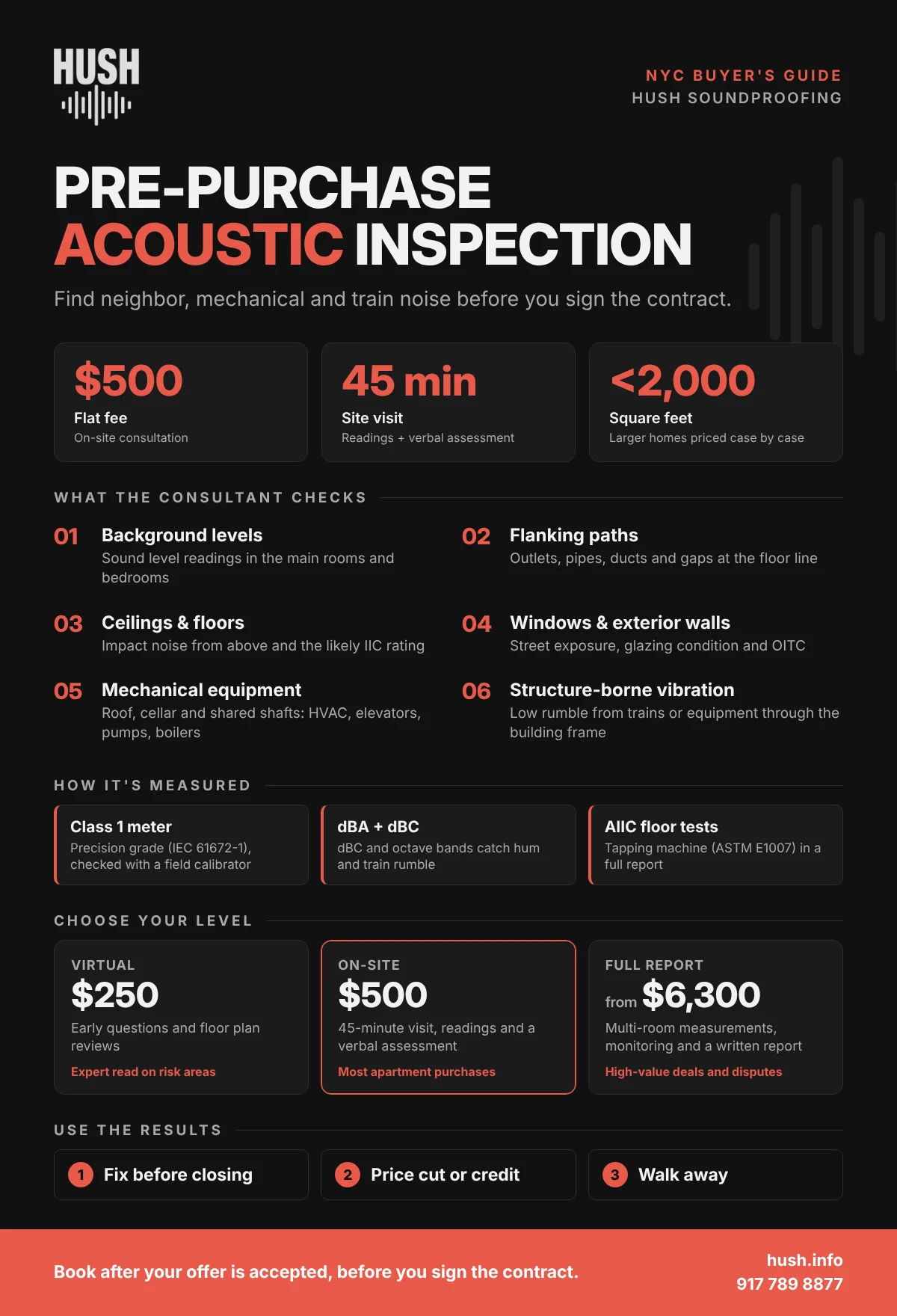
Brick Underground recently reported on this growing trend among NYC buyers. The article noted that Hush charges a $500 flat fee for a 45-minute visit to homes under 2,000 square feet (Brick Underground, 2026). Larger homes are priced case by case.
Why Noise Is Easy to Miss Before You Move In
Open houses are scheduled for good light, not for honest sound. As a result, the problems that matter most tend to hide during a showing:
- Neighbor noise. Footsteps, voices and TVs depend on who lives upstairs and when they are home.
- Mechanical noise. Rooftop HVAC units, elevators, pumps and boilers cycle on and off. So a quiet showing proves very little.
- Structure-borne vibration. Low rumble from trains or equipment travels through the building frame, not just the air.
- Street and nightlife noise. A block that feels calm at noon can change completely after dark.
In one case from the same Brick Underground report, Shatzer traced a vibration through a ceiling and several walls to a dryer’s gas line. The meter feeding it sat about 50 feet away. No buyer would find that on a walkthrough.
What the Consultant Checks
Every home is different. Still, a solid pre-purchase acoustic inspection usually covers the same core items:
- Background levels. First, the consultant takes sound level readings in the main rooms and bedrooms.
- Flanking paths. Next, they look for weak spots such as outlets, pipes, ducts and gaps at the floor line. These routes let sound bypass the wall or ceiling itself.
- Ceilings and floors. Then they assess impact noise from above and the likely IIC rating of the assembly. See our guide to STC and IIC ratings for what those numbers mean.
- Windows and exterior walls. They also note street exposure and the condition of the glazing. For street noise, OITC (Outdoor–Indoor Transmission Class) is the better window rating, because it weights low traffic and train frequencies.
- Mechanical equipment. Finally, they listen for equipment on the roof, in the cellar and in shared shafts.
Those readings should come from a Class 1 sound level meter (IEC 61672-1), the precision grade, checked with a field calibrator. Also ask for dBC as well as dBA readings. A-weighting follows human hearing at moderate levels, so it under-reads bass. As a result, mechanical hum and train rumble show up better in dBC and octave-band data.
Ideally, you should be there for the visit. That way, the consultant learns what bothers you most. A light sleeper and a remote worker care about very different things.
Quick Consultation vs. a Full Acoustic Report
Most buyers start with a quick consultation. However, some deals call for more data. A full report adds measurements in several rooms, sometimes over several days, and compares the results with city rules. Hush’s full acoustic report starts at $6,300.
In practice, a pre-purchase acoustic inspection answers “is there a red flag?” while a full report documents it. For example, measured floor testing uses a standard tapping machine on the floor above. The result is a field rating such as AIIC (ASTM E1007), which usually lands a few points below lab IIC.
| Option | Best for | What you get |
|---|---|---|
| Virtual consultation ($250) | Early questions and floor plan reviews | Expert read on risk areas and next steps |
| On-site consultation ($500) | Most apartment purchases | 45-minute visit, readings and a verbal assessment |
| Full acoustic report (from $6,300) | High-value deals, disputes and lender or board needs | Multi-room measurements, monitoring and a written report |
How Buyers Use the Results to Negotiate
A pre-purchase acoustic inspection gives you facts, not just a feeling. Because of that, it changes the conversation with the seller. Typically, buyers do one of three things:
- Ask the seller to fix the source before closing.
- Negotiate a lower price or a credit to cover soundproofing.
- Walk away if the problem cannot be fixed at a sensible cost.
In one deal Shatzer described, the seller put money in escrow for an acoustic fence around a rooftop HVAC unit. The work was then finished after closing.
A Note on Disclosure Rules
Do not count on a disclosure form to flag noise. New York’s Property Condition Disclosure Act was updated in March 2024, and sellers can no longer skip it with a $500 credit. Even so, co-op and condo unit sales are not covered by the Act (Cuddy & Feder LLP). For most Manhattan and Brooklyn apartments, your own due diligence is the main protection. As always, ask your attorney how the rules apply to your deal.
Already Moved In? It Is Not Too Late
Sometimes the noise only appears after the moving truck leaves. In that case, the same assessment still helps. It shows whether the fix is a quick seal, a new soundproof ceiling, or a talk with the building about equipment. Renters have fewer options, so for them the pre-lease check matters even more.
Ready to check a home before you commit? Book a consultation with Hush, or read more about working with an acoustical consultant in NYC.
Pre-Purchase Acoustic Inspection FAQ
When should I schedule a pre-purchase acoustic inspection?
Book it after your offer is accepted but before you sign the contract. That gives you time to negotiate if the consultant finds a problem.
How long does the visit take?
A standard on-site visit takes about 45 minutes for homes under 2,000 square feet. Larger homes and full reports take longer.
Can the consultant measure my upstairs neighbor?
Yes, within limits. The consultant can test the ceiling and judge how well it blocks impact noise. Still, real-world footfall depends on who lives there, so they will explain the risk rather than promise a result.
Keep in mind that IIC under-weights low-frequency thuds, like heel strikes. So a ceiling can test well and still pass a deep thump. Our guide to upstairs neighbor noise explains your options.
Is a pre-purchase acoustic inspection worth it for a rental?
Often, yes. Renters usually cannot change walls or ceilings, so knowing about noise before signing protects you from a year of bad sleep.
Will the report help with a co-op board?
It can. A written report shows the board you plan any soundproofing work responsibly, and it gives your contractor clear targets.