
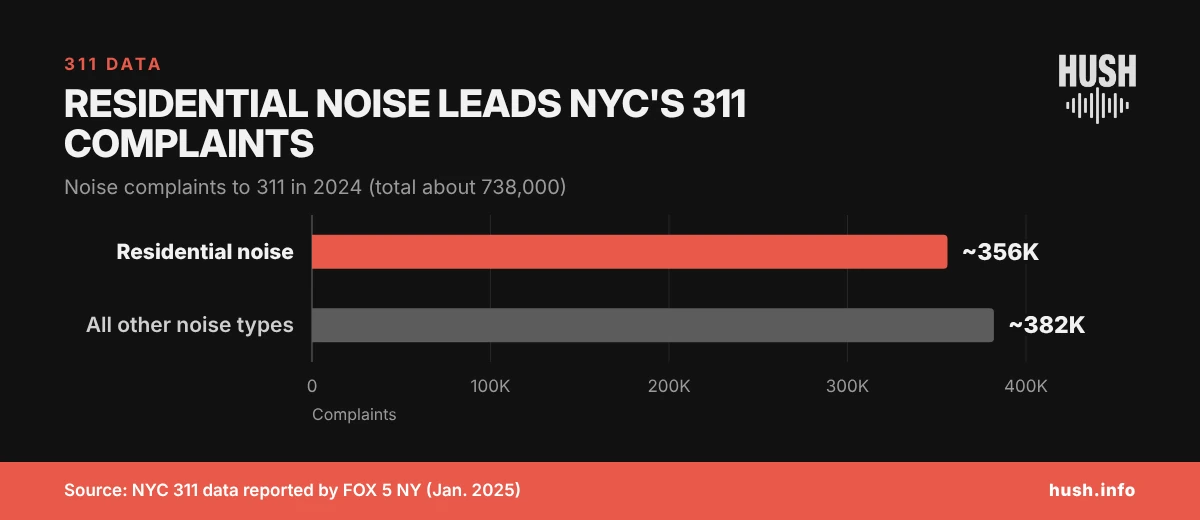
Noise is the number one complaint New Yorkers make to 311. In 2024, the city logged more than 738,000 noise complaints, and over 356,000 of them were about residential noise (FOX 5 NY). So before you sign a lease or a contract, it pays to run through an apartment noise checklist. It takes an hour or two, and it can save you years of bad sleep.
Step 1: Check the Block’s 311 History
Start at your desk. The city publishes every 311 request as open data, including noise complaints by address and type (NYC 311 Service Requests dataset). For example, you can filter for “Noise – Residential” or “Noise – Commercial” near the building.
A few complaints mean little in a dense city. However, a steady pattern of late-night commercial noise or repeated helicopter or construction calls tells you something real about the block.
Step 2: Visit at the Wrong Times
Showings happen at convenient hours. Noise does not. So go back at least twice:
- Weeknight, 10 p.m. to midnight. This is when bars, neighbors and deliveries peak.
- Early morning, 6 to 8 a.m. Garbage trucks, buses and building equipment start up.
- Weekend evening. Nightlife noise is often worst on Friday and Saturday.
Stand in the bedroom with the windows closed, then open. If you cannot get inside, at least walk the block and listen from the street.
Step 3: Your Apartment Noise Checklist for the Unit Itself
Once you are inside, use this apartment noise checklist room by room:
- Look up. Is there a finished ceiling under the upstairs unit, or just old plaster? Ask what flooring the neighbor has.
- Knock on shared walls. A hollow sound often means a light wall with little mass.
- Find the outlets. Back-to-back outlets on a party wall are a common sound leak.
- Check the windows. Single-pane or loose sashes let in street noise. Look for gaps and worn seals.
- Listen for hum. A low drone may come from rooftop HVAC, elevators or pumps.
- Feel the floor. If you feel a rumble when a train passes, you may have structure-borne vibration.
- Check the entry door. Light hollow doors and big gaps let hallway noise in.
Step 4: Ask the Right Questions
Brokers and boards will not always volunteer noise issues. Therefore, ask directly:
- Who lives above, and do they have rugs or hard floors?
- Does the building have a carpet rule or an alteration agreement with sound rules?
- Where are the boiler, elevator machine room and rooftop units?
- Has anyone complained about noise from the commercial space downstairs?
- Is any construction planned next door?
A Manhattan real estate guide on noise due diligence makes the same point and also cites Hush’s work for buyers (Manhattan Miami Real Estate).
Step 5: Bring in a Professional When the Stakes Are High
A checklist catches the obvious problems. Still, some issues need instruments. An acoustical consultant can measure sound levels, find flanking paths and judge what a fix would cost. That is the idea behind a pre-purchase acoustic inspection. In addition, our soundproofing cost guide helps you budget if you decide to buy and fix.
Red Flags vs. Fixable Problems
| What you notice | Usually fixable? | Typical fix |
|---|---|---|
| Footsteps from above | Yes | Decoupled ceiling, rugs upstairs |
| Voices through a party wall | Yes | Added wall assembly, sealed outlets |
| Street traffic through windows | Yes | Interior window inserts or new windows |
| Bar bass below the unit | Sometimes | Floor work plus action by the venue |
| Train rumble through the structure | Hard | Isolated floors and walls; costly |
If you plan to stay, many of these problems have good solutions. See our apartment soundproofing page for the options.
Apartment Noise Checklist FAQ
What is the best time to check an apartment for noise?
Visit on a weeknight between 10 p.m. and midnight, and again early in the morning. Those windows show nightlife, neighbors and building equipment.
How do I look up noise complaints for an address?
Use the city’s 311 open data. Filter by address or ZIP code and by noise complaint type.
Can I ask the landlord about noise complaints?
Yes. You can ask about past complaints, nearby construction and building equipment. Get answers in writing when you can.
Is a top-floor apartment always quieter?
Not always. You avoid footsteps from above, but you may sit right under rooftop HVAC units and other equipment.
What should I bring to a viewing?
Bring this apartment noise checklist, a phone with a sound meter app for rough readings, and a list of questions for the broker.