
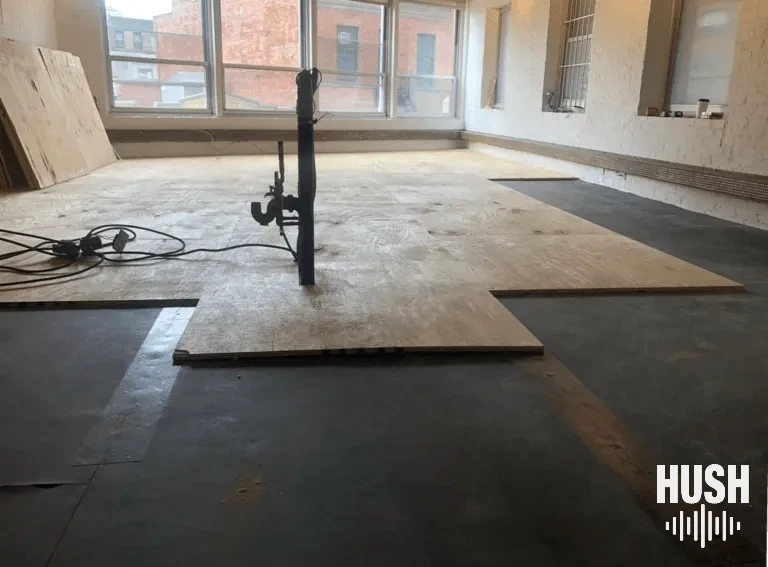
Renovating a co-op or condo in New York means working within the building’s rules. For soundproofing, the key document is the alteration agreement. It controls what you can build, when your crew can work and, in many buildings, how much sound your floors must block. Read it early, because alteration agreement soundproofing rules can shape your whole design.
What an Alteration Agreement Covers
An alteration agreement is a contract between you and the building for renovation work. It usually covers:
- Plans that need board or architect review before work starts.
- Insurance, deposits and approved work hours.
- Rules for plumbing, electrical and structural changes.
- Floor coverings and sound control, especially when you remove carpet or install hard floors.
Boards take that last part seriously. In one New York case, a co-op stopped a shareholder’s renovation to enforce its floor covering and sound rules. The court found the co-op was within its rights, since the alteration agreement expressly allowed the stop-work order (Siegler v. 875 Tenant Corp., N.Y. Sup. Ct. 2010).

The 80 Percent Carpet Rule
Many co-op house rules require rugs or carpet over at least 80 percent of the floor in living rooms, dining rooms and bedrooms. Kitchens, bathrooms and halls are usually exempt. One court enforced the rule in an eviction case and measured the full room area, not just walking paths (Habitat Magazine).
Because of that, many owners who want hard floors without wall-to-wall rugs choose a tested sound underlayment instead. In addition, many buildings let you replace the carpet rule with a floor assembly that meets a minimum impact rating.
Alteration Agreement Soundproofing: Typical Requirements
| Common requirement | What it means for your project |
|---|---|
| Minimum IIC rating for new floors | Your floor assembly must block a set level of impact noise |
| Approved underlayment | You may need a product with lab test data |
| Architect or engineer sign-off | Drawings must show the floor and ceiling build-up |
| Field testing | Some boards ask for a test after install |
| Work hours | Noisy work is often limited to weekday daytime hours |
Not sure what an IIC rating is? Our guide to STC and IIC ratings explains the numbers and typical targets.
How to Get Soundproofing Approved Faster
- Ask for the rules first. Get the alteration agreement and house rules before you design anything.
- Specify tested assemblies. Next, use products and build-ups with published lab results. Boards trust data.
- Show the details. Then include drawings of clips, channels, sealant and underlayment. Vague plans get sent back.
- Plan for flanking. Also show how you will seal outlets, pipes and edges. Good assemblies fail when these are ignored.
- Offer testing. Finally, a post-install field test can settle concerns before they become disputes.
Hush prepares soundproofing scopes that boards can review quickly. See our floor soundproofing and ceiling soundproofing pages for typical assemblies.
When You Are the Downstairs Neighbor
The same rules protect you. If an upstairs renovation removes carpet and the noise gets worse, the alteration agreement and house rules may give the board grounds to act. Document the change, then write to management. Our guide to upstairs neighbor noise covers your next steps.
Alteration Agreement Soundproofing FAQ
Do I need board approval for soundproofing?
Usually, yes. Most co-ops and condos treat soundproofing as an alteration, so it needs approval under the alteration agreement.
Can I install hardwood floors in a co-op?
Often, yes, if you meet the building’s sound rules. Many buildings require a tested underlayment or a minimum IIC rating.
What is the 80 percent carpet rule?
It is a common house rule that requires rugs or carpet over at least 80 percent of the floor in main living areas.
Does a soundproof ceiling count toward the rules?
Rules usually focus on your floor, since it protects the neighbor below. A ceiling upgrade protects you from the unit above.
How long does board review take?
It varies by building. Complete drawings and tested products help speed it up.