
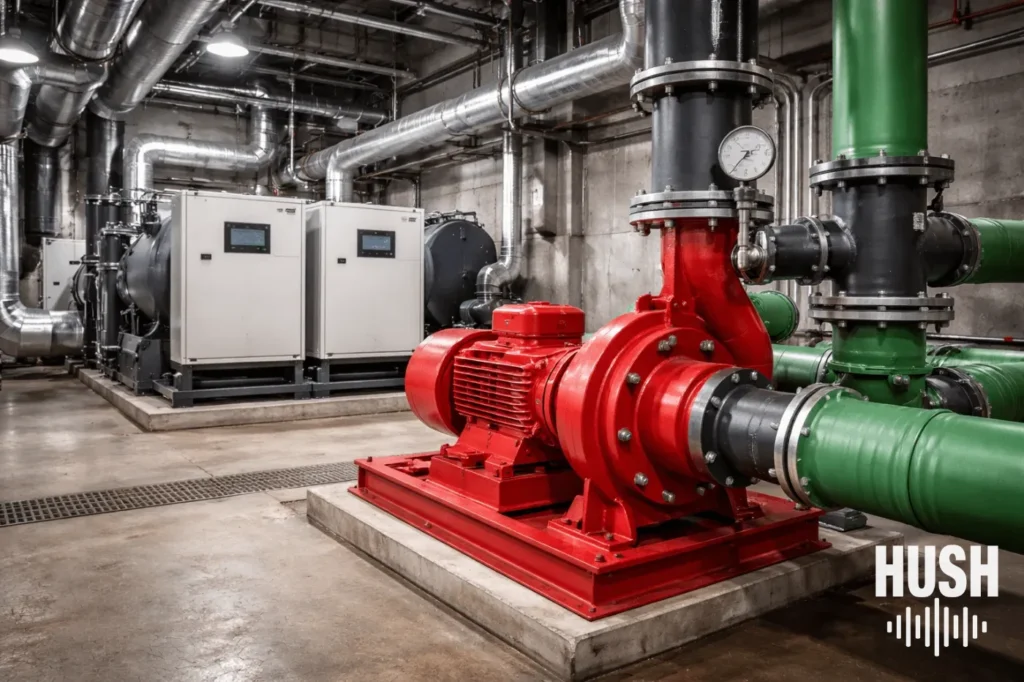
Some noise problems refuse to behave. You seal the windows, add rugs and hang curtains, yet the hum or thud is still there. In many New York buildings, the cause is structure-borne noise. The sound is not coming through the air. Instead, it travels through steel, concrete, pipes and framing, and then a wall or ceiling turns it back into sound in your room.
This guide explains how structure-borne noise works, where it comes from in NYC buildings, and how professionals track it down and stop it.
What Is Structure-Borne Noise?
Every sound starts as vibration. With airborne noise, that vibration moves through the air until it hits a wall. With structure-borne noise, the source is attached to the building, so the vibration enters the structure directly. For example, a pump bolted to a slab, a footstep on a hard floor, or a train in a nearby tunnel all inject vibration straight into the frame.
Once inside, vibration can travel a long way with little loss. As a result, the noise often shows up far from where it starts, sometimes several floors away.
How Vibration Is Measured
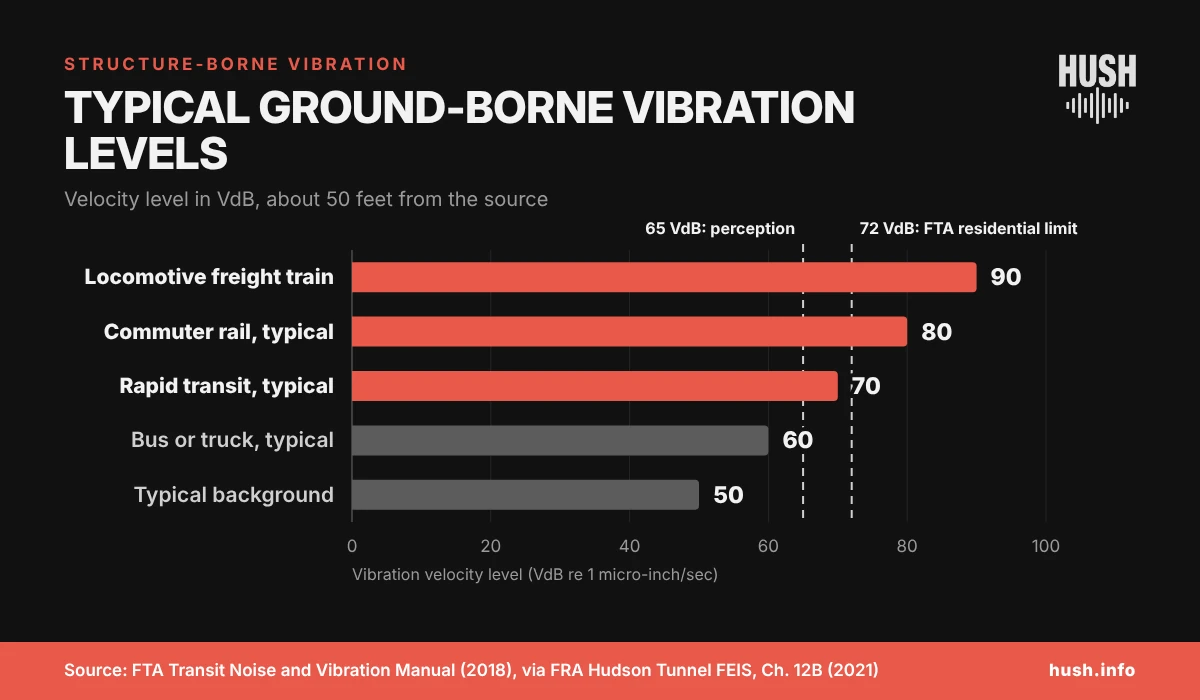
Engineers measure vibration as velocity, often in VdB. Transportation agencies publish guidance on how people respond to vibration and what levels risk annoyance or damage. Caltrans, for instance, maintains a detailed vibration guidance manual used on transit and construction projects (Caltrans Vibration Guidance Manual).
The key point for residents is simple. People start to feel vibration at around 65 VdB, and typical rapid transit sits near 70 VdB at 50 feet. However, you can hear the rumble even below the level you can feel.
Common Sources of Structure-Borne Noise in NYC
- Footsteps and impact. Hard floors upstairs send each step into the slab and down into your ceiling.
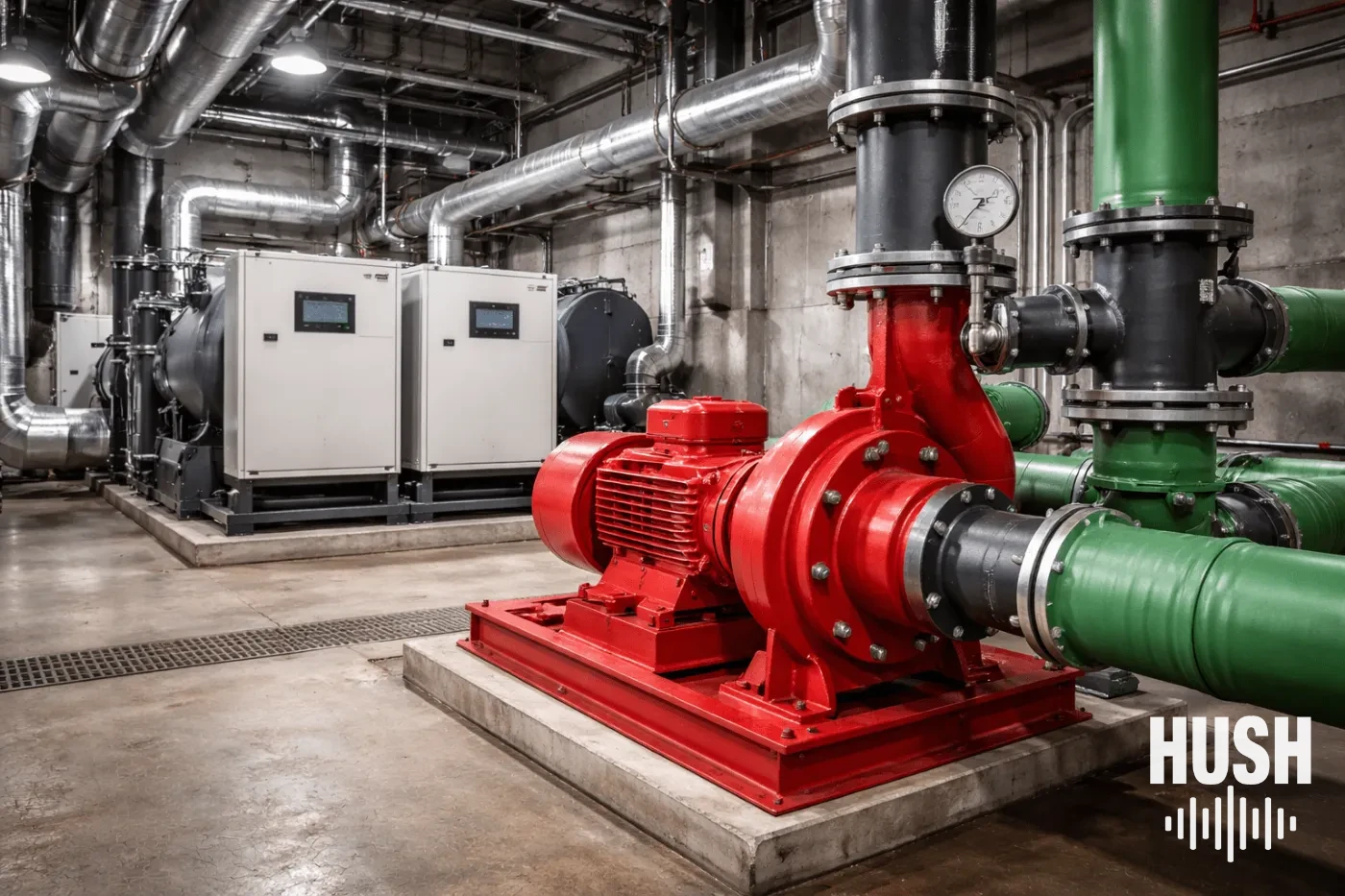
- Mechanical equipment. Pumps, boilers, chillers and elevator machines can all transmit vibration. See our pages on pump soundproofing and elevator soundproofing.
- Pipes and ducts. Rigid connections carry vibration from equipment into walls and ceilings.
- Subways and trains. Vibration moves through soil and foundations into lower floors.
- Construction next door. Demolition, drilling and pile driving can shake whole blocks.
Why Ceilings Get Most of the Attention
In a typical apartment, the ceiling is where structure-borne noise from above lands. That is no accident. Brick Underground reported that Hush founder Ned Shatzer estimates 80 to 90 percent of his work involves ceilings (Brick Underground). The fix is usually a decoupled ceiling that hangs on isolation clips, so the new surface does not touch the vibrating slab. Our ceiling soundproofing page shows how it is built.
How to Stop Structure-Borne Noise
The rule is to break the path. Mass alone helps with airborne sound, but vibration needs isolation. In practice, that means:
- Isolate the source. First, put equipment on spring or neoprene isolators and add flexible connectors to pipes and ducts.
- Break the path. Next, use clips, channels and floating floors so new surfaces do not touch the structure.
- Add damping. Then use damping compounds between layers so panels do not ring.
- Seal the flanking paths. Finally, close gaps where rigid items such as pipes pass through.
Finding the Source Takes Detective Work
Because vibration travels so far, the loudest spot is often not the source. Consultants use accelerometers and sound meters to trace the path. They switch equipment on and off, compare readings in different rooms and follow the trail back. In one case we handled, the culprit turned out to be a gas line carrying vibration from a dryer. Getting the diagnosis right prevents expensive fixes in the wrong place.
If you hear a hum, thud or rumble you cannot explain, book a consultation. We will find the path first, then recommend the fix.
Structure-Borne Noise FAQ
What is the difference between airborne and structure-borne noise?
Airborne noise travels through the air, like voices or traffic. Structure-borne noise travels through the building itself, like footsteps or vibrating equipment.
Will acoustic panels stop structure-borne noise?
No. Panels reduce echo inside a room. Structure-borne noise needs isolation and decoupling.
Can structure-borne noise damage my building?
Everyday sources rarely cause damage. Heavy construction and blasting can, which is why projects monitor vibration near older buildings.
Why do I hear a hum only at night?
Background noise drops at night, so steady equipment hum stands out. Also, some systems cycle more often overnight.
Who is responsible for fixing equipment vibration?
Usually the owner of the equipment, often the building. A measured report helps you make the case.