
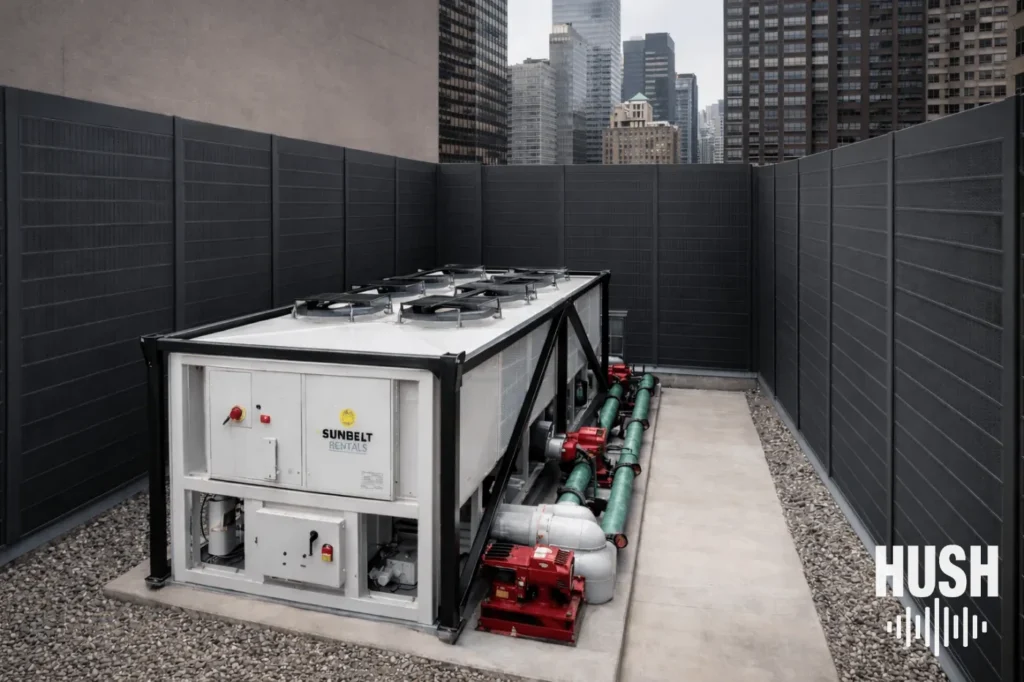
A rooftop condenser that drones all night. A neighbor’s AC unit humming three feet from your bedroom window. These are some of the most common, and most frustrating, noise problems in New York. The good news is that the city’s Noise Code sets clear numbers for this kind of equipment. So if you plan to file an HVAC noise complaint, you can measure against a real standard rather than an opinion.
What the NYC Noise Code Says About HVAC
The Noise Code calls air conditioners, condensers and fans “circulation devices.” The headline rule is 42 dB(A), measured inside the affected home, with the window open, three feet from the window (NYC DEP Noise Code Fact Sheet).
The full code text adds more detail (NYC Administrative Code, §24-227):
- Each device: no more than 42 dB(A) inside a receiving dwelling unit.
- New or replaced equipment: when a device is installed or replaced, all the owner’s devices on that lot combined must stay at or below 45 dB(A).
- Large existing systems: if the combined sound tops 50 dB(A), the city can order a 5 dB(A) cut within 12 months.
Business Equipment Has Extra Limits
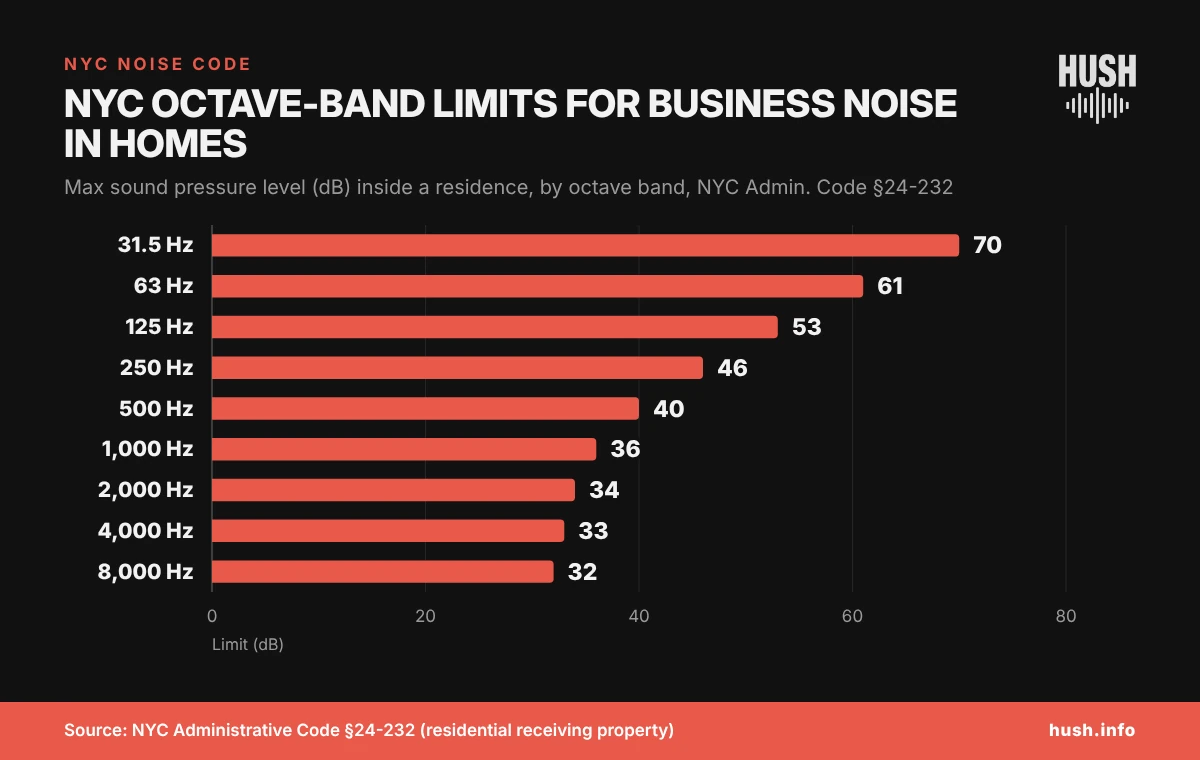
Noise from commercial or business sources also faces octave-band limits inside homes. These limits are stricter at higher pitches and looser at low pitches. Even so, low-frequency hum is often the part that keeps people up, because it passes through walls and windows easily.
How to File an HVAC Noise Complaint That Gets Results
- Identify the unit. First, note where it is, who owns it and when it runs.
- Keep a log. Next, record dates, times and how long it runs. Nighttime cycling is especially useful to document.
- Talk to the owner. Many owners fix the problem once they know. Building managers often respond faster than 311.
- Call 311. If talking fails, file an HVAC noise complaint with the city. An inspector may take measurements.
- Get a professional reading. Finally, a consultant’s measurement against the 42 dB(A) standard gives you strong evidence.
Co-op and condo boards face this often, especially when a neighboring retail tenant adds rooftop units. Habitat Magazine’s board forum shows boards using unit enclosures, managing agents and group complaints to push for fixes (Habitat Magazine).
How HVAC Noise Gets Fixed
Whether you own the equipment or are the one hearing it, the fixes are similar:
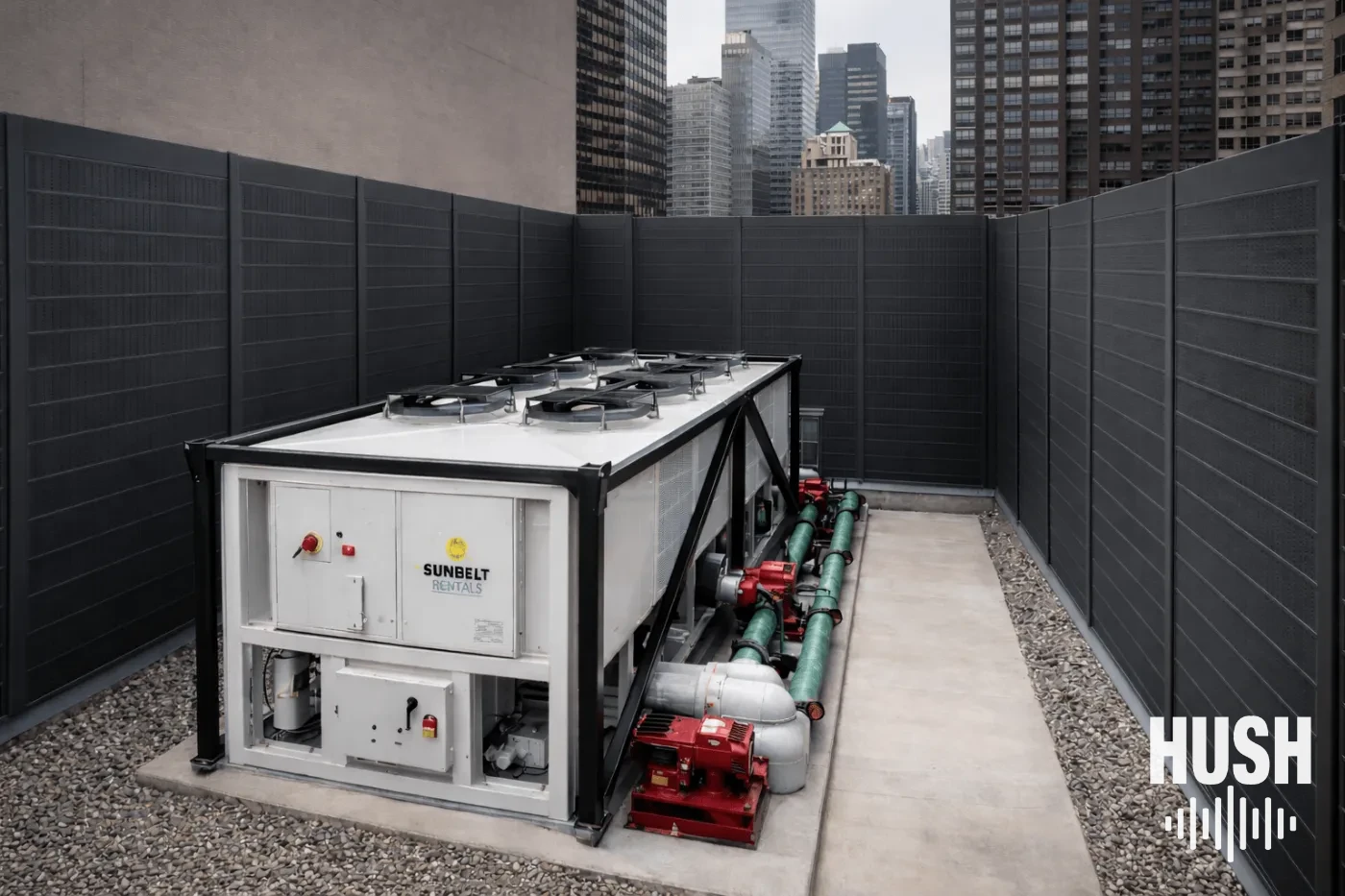
- Acoustic barriers and enclosures. Sound-absorbing barriers around rooftop units block the direct path to nearby windows. See our HVAC unit soundproofing page.
- Vibration isolation. Spring isolators and flexible connectors stop the unit from shaking the roof slab.
- Duct silencers and lining. These reduce fan noise that travels through ductwork. Learn more about HVAC duct soundproofing.
- Relocation or replacement. Sometimes a quieter or relocated unit is the cheapest long-term answer.
- Window upgrades. If the source cannot be fixed fast, better windows protect the bedroom in the meantime.
For Owners: Avoiding Violations
If you own the equipment, measure before your neighbors do. A short survey shows whether you meet the code. It also identifies the cheapest fix. In one real estate deal, a seller even put money in escrow for an acoustic fence around a rooftop unit to keep the sale on track. Our mechanical noise team handles both measurement and mitigation.
HVAC Noise Complaint FAQ
What is the legal noise limit for an AC unit in NYC?
42 dB(A), measured inside the affected home with the window open, three feet from the window.
Does the limit apply to my neighbor’s window AC?
The circulation device rules cover air conditioners and similar equipment. The measurement is taken in the home receiving the noise.
How long does the city take to respond?
It varies. Because inspectors may come later, keep a log and consider an independent measurement.
Can a building be forced to fix a rooftop unit?
Yes, if the unit violates the code. The city can issue violations and, for loud existing systems, order a reduction.
Will a barrier stop low-frequency hum?
Barriers help most with mid and high frequencies. Low hum often also needs vibration isolation and, sometimes, window upgrades.