
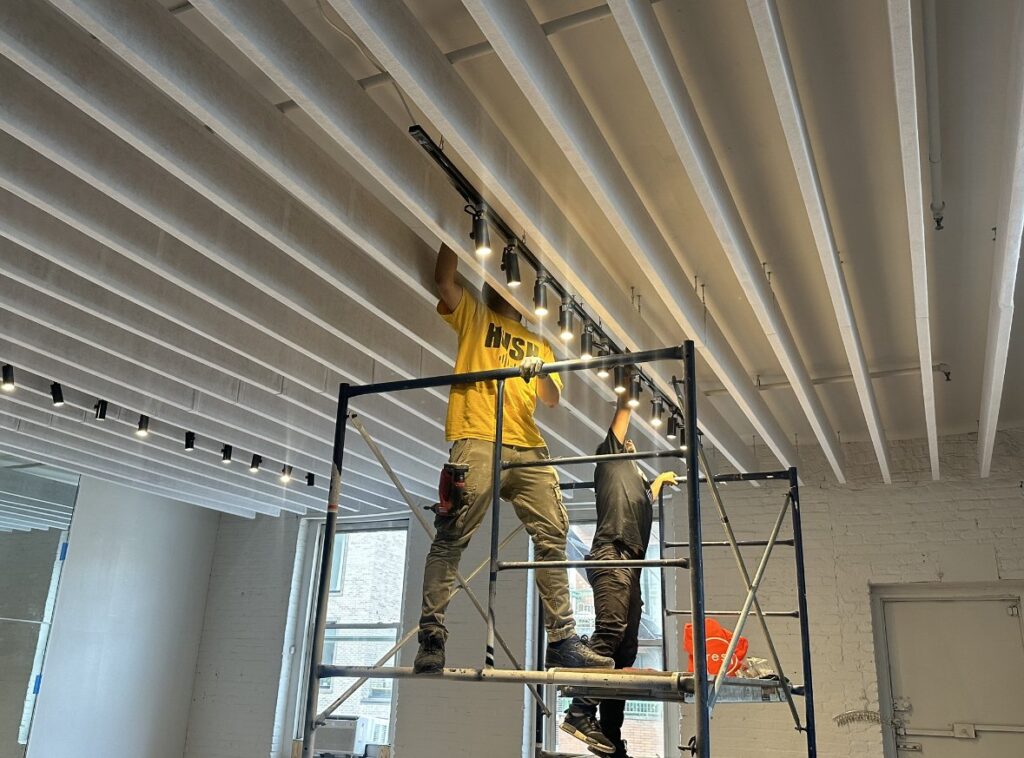
Acoustical Panels: Expert Acoustic Wall Panel Installation in New York
New York City stays loud by design. Your workspace does not need to be. Acoustical Panels control echo, sharpen speech, and reduce listening fatigue. They improve clarity without sealing a room shut.
At Hush, we design and install Acoustical Panels using measured acoustic targets. We focus on performance first, then aesthetics. That approach delivers reliable results in real spaces.
If your project also requires isolation between rooms, start with office soundproofing. Acoustics and sound isolation solve different problems.
What Acoustical Panels Actually Do
Echo is not volume. Echo is reflection. Hard surfaces return sound energy into the room. Acoustical Panels absorb and scatter that energy.
As a result, speech becomes easier to follow. Meetings feel calmer. Video calls sound cleaner.
Panels do not block sound between rooms. They control sound behavior inside the room. That distinction matters during design.
How We Measure Echo Reduction
We rely on metrics because comfort is measurable. Listening alone is not enough.
RT60 Reverberation Time
RT60 describes how long sound lingers after it stops. Shorter decay improves speech clarity. Long decay increases fatigue.
Peer reviewed research explains how reverberation time affects room perception in controlled acoustic studies.
Noise Reduction Coefficient
NRC describes how much sound a material absorbs on average. Higher values reflect less sound back into the room.
Absorption ratings come from standardized lab testing, such as reverberation room measurement methods.
NRC does not predict soundproofing. It predicts echo reduction only.
Noise Scattering Coefficient
Absorption is not the only tool. Scattering breaks up strong reflections without over dampening.
This matters in glass heavy spaces. It also matters in long conference rooms.
Acoustical Panel Types We Install
Felt Panels
Felt panels offer controlled absorption with a thin profile. They suit modern offices and open spaces. They also pair well with glass and polished finishes.
We often use felt to treat corridors and large wall fields. The room feels calmer without looking padded.
Fabric Covered Panels
Fabric covered panels use mineral wool or fiberglass cores. They deliver broad frequency absorption.
These panels work well in conference rooms and executive offices. Fabric finishes allow color and texture control.
Acoustic Wall Panel Installation
Installation matters as much as the panel itself. We evaluate wall type, structure, and attachment points first.
We use mechanical mounting systems that avoid rattles and gaps. Clean edges preserve performance over time.
For adjacent room noise issues, review wall soundproofing before finalizing finishes.
Ceiling Baffles and Ceiling Clouds
Ceiling Baffles treat large volumes efficiently. They provide absorption on multiple faces.
Baffles work well in tall rooms and open plans. They also preserve ceiling access and lighting layouts.
Research shows how baffles and reflectors shape room response in controlled acoustic environments.
For noise transfer above or below the room, pair treatments with ceiling soundproofing.
Glass Partitions and Sound Control
Glass reflects sound like a mirror. It increases glare and flutter echo.
We manage glass with nearby absorption and scattering. We also control leakage at frames and doors.
When privacy matters, acoustic design must coordinate with construction. That is where measured guidance helps.
Our acoustical consultant service supports that coordination.
Words You May Not Hear Every Day
- Flutter echo is rapid reflection between parallel surfaces.
- Specular reflection is mirror like sound bounce.
- Critical distance marks balance between direct and reflected sound.
- Diffuse field describes evenly scattered sound energy.
- Sabins measure total absorption in a room.
When Acoustical Panels Are Enough
Panels work best for echo and clarity. They improve comfort inside the room.
They do not stop neighbors or traffic. That requires isolation assemblies.
Next Steps
If your space echoes, we can fix it. If it also leaks sound, we can address that too.
Start with a plan. Use soundproofing consultation to define the right scope.