
Soundproofing A Room: The Sweet Sound of Silence
Soundproofing a room is not a product hunt. It is a path decision. First, identify how noise enters the space. Next, build an assembly that blocks that path. Then, detail it so it stays airtight.
A soundproof room feels different right away. Your sleep improves. Your calls sound cleaner. Your stress drops because the room stops reacting to the building.
Deciphering the enemy: what sound is
In standards language, sound is an oscillation in pressure that travels through a medium. In real rooms, sound arrives in two ways. Airborne sound rides in air. Structure borne energy rides in framing, masonry, and connected steel.
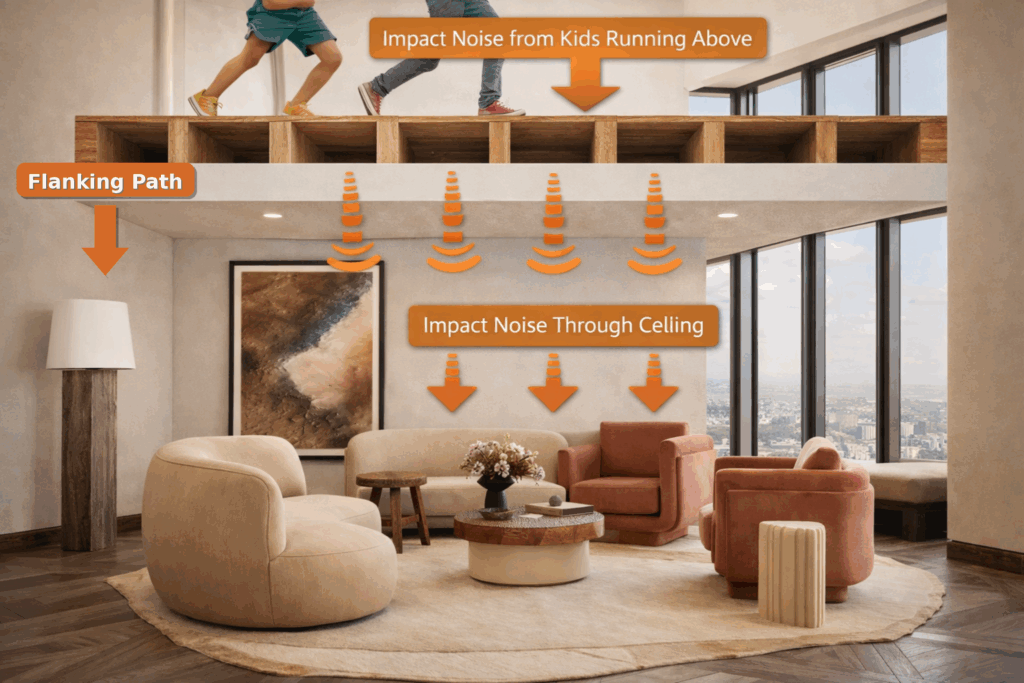
Then flanking shows up. Sound avoids the surface you upgraded. It slips through edges, chases, and rigid bridges. That is why simple layers often disappoint.
Sound isolation vs room acoustics
Isolation controls sound transfer between rooms. Acoustics controls echo and clarity inside a room. Foam and fabric help acoustics. They rarely soundproof a room. Therefore, pick the right goal first.
The six moves that drive soundproofing a room
We see the same six moves in every high performing scope. You do not need all six every time. However, skipping the wrong one kills results.
- Sealing. Close perimeters, cracks, and penetrations.
- Mass. Add weight so surfaces move less.
- Decoupling. Break vibration paths between structure and finish.
- Damping. Reduce panel ring with viscoelastic control.
- Absorption. Fill cavities so bays stop acting like speakers.
- Distance. Increase air gap when you can.
If you want clean benchmarks, learn how Sound Transmission Class tracks airborne control. Also learn how Impact Insulation Class tracks footfall and impact. Finally, use Noise Reduction Coefficient to evaluate absorption.
Start with a fast noise audit
Before you buy anything, answer a few direct questions. These answers shape the scope.
- Do you hear voices clearly, or mostly muffled tones?
- Do you hear footfall, chair drag, or bass?
- Does the noise spike near outlets, corners, or HVAC returns?
- Does the room feel louder at night, or during HVAC cycles?
Next, listen for the dominant path. If the noise changes with your position, you have flanking. If the room buzzes or “pressurizes,” you have resonance. Then you can soundproof a room with intention.
A practical order of operations
Sequencing matters in soundproofing a room. Do the steps in order. You protect performance and save labor.
- Seal all perimeters and penetrations.
- Treat weak points, including device boxes and fixtures.
- Address structure borne vibration with decoupling.
- Add cavity absorption before you close anything.
- Add mass and damping at the finish plane.
- Re seal after finishing and trim.
Walls: where soundproofing a room usually fails
Walls fail when people treat them as flat surfaces. In apartments, walls connect to ceilings, floors, and chases. Therefore, you must control junctions and penetrations. Start with your wall assembly strategy, not a single layer.
Next, treat outlet boxes like ports. Seal the perimeter. Add putty where appropriate. Also avoid back to back boxes when you can.
Ceilings: the highest ROI for many apartments
If upstairs impact drives the complaint, focus on the ceiling. Footsteps enter the structure and spread. Then the ceiling re radiates into your room. A real ceiling scope uses sealing, decoupling, absorption, and mass. That is why ceiling soundproofing often outperforms wall only work.
Floors: control the source when you can
If you control the floor above, start there. You reduce the energy before it enters the structure. Underlayment, isolation, and impact control move the needle fast. See practical options in floor soundproofing.
HVAC and penetrations: the silent dealbreakers
Returns and chases are open pathways. They can bypass your new assembly. Therefore, treat them as part of the system. Use lined paths, controlled turns, and airtight detailing. If you skip this, you will still hear your neighbors.
What helps renters right now
Renters still have options. These steps will not fully soundproof a room. However, they can reduce annoyance quickly.
- Weatherstrip doors and add a door sweep.
- Use thick area rugs and a quality pad.
- Add bookcases on party walls for extra mass.
- Use heavy curtains to cut reflections and glare.
Myths that waste money
Soundproof paint will not solve neighbor noise. It can add minor damping on light panels. Read how sound damping coatings work in practice. Also skip thin foam for isolation. Foam helps echo, not transmission.
When to bring in a pro
If you hear voices clearly, bass, or strong footfall, treat it as an assembly job. That work needs clean detailing and real sequencing. If you want a scope that matches your building, start with a soundproofing consultation.